Exams taken by children are always a challenge due to their complexity, the pressure felt differently by each student, and the emotions experienced by families. That’s why they must be approached with the objectivity that any form of assessment requires, while also showing emotional care for the students.
This year, the final results from the first session of the Baccalaureate show that in Bacău County, for the current graduating class, the pass rate is 88.1% (up from 86.4% before appeals), higher than the national rate of 81.9%. The cumulative pass rate (calculated based on the averages of both current and previous graduates) is 84% (above the national rate of 76.5%), showing a 1.8% increase compared to the initial results, when the cumulative pass rate was 82.1% (above the national rate before appeals, which was 74.3%). This placed Bacău County in second place nationally, both in terms of the cumulative rate and the rate for the current graduating class. It is encouraging that approximately 61% of passing averages were above 8, confirming a solid knowledge base that, once activated, led to success.
For the 2025 session of the National Assessment, the results obtained by 8th grade students from Bacău are as follows: 84.6% (3,921 candidates) achieved an average score of 5 or higher, surpassing the national average. In terms of individual scores, a student from “Spiru Haret” Gymnasium in Bacău achieved a perfect 10 average. At the Romanian Language and Literature exam, 10 students earned the maximum score of 10, while in Mathematics, 18 candidates achieved a 10.
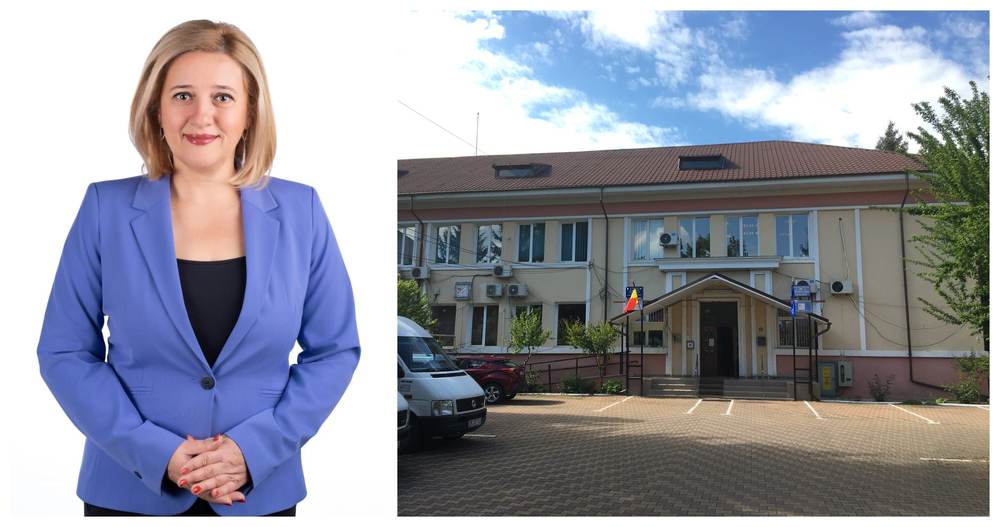
Ana-Maria Egarmin, County Chief School Inspector
“The end-of-cycle educational results obtained this year by students from Bacău are satisfying — both through the honorable second place nationally in the Baccalaureate rankings and through the higher scores and averages in the National Assessment, especially in the case of students from rural areas. In recent school years, a silent but conscious and targeted effort has been made in Bacău education to address the reasons behind students not attending exams or achieving poor results.
Beyond the statistics, I want to emphasize how important the consistent involvement of teachers is — both professionally and, more importantly, on a human level — whether in standard exam preparation scenarios or in crisis situations.
A telling example is that of a student from a well-regarded high school in Bacău whose teacher initially refused to allow him to register for a specific Baccalaureate subject, arguing that he had decided too late and wouldn’t meet the minimum passing score. However, the student, somewhat driven, passed the Baccalaureate (not with high marks, but he passed!), proving once again that we, the adults, often need to “look at the whole picture” and honestly ask ourselves: Are we helping, guiding, shaping — or are we hindering a path that could be ascending for the young person we’re educating?
Another special case is that of a student from Bacău who fractured his spine shortly before the exam. He took the tests while hospitalized. The tension of the moment, the uncertainty about where exactly the young man would be — undergoing investigations or surgeries at the time of the exam — all faded into the background thanks to the determination of the student and his mother, as well as the flawless cooperation between the school inspectorates of the two counties involved, and the Ministry of Education and Research. Today, we all share the joy of a beautiful result, all the more motivating for a young person deeply affected by a serious medical issue.
Encouragement, goodwill, and confidence in our children, paired with knowledge instilled hour by hour, offer them the chance to move forward to the next stage of their personal journey.”