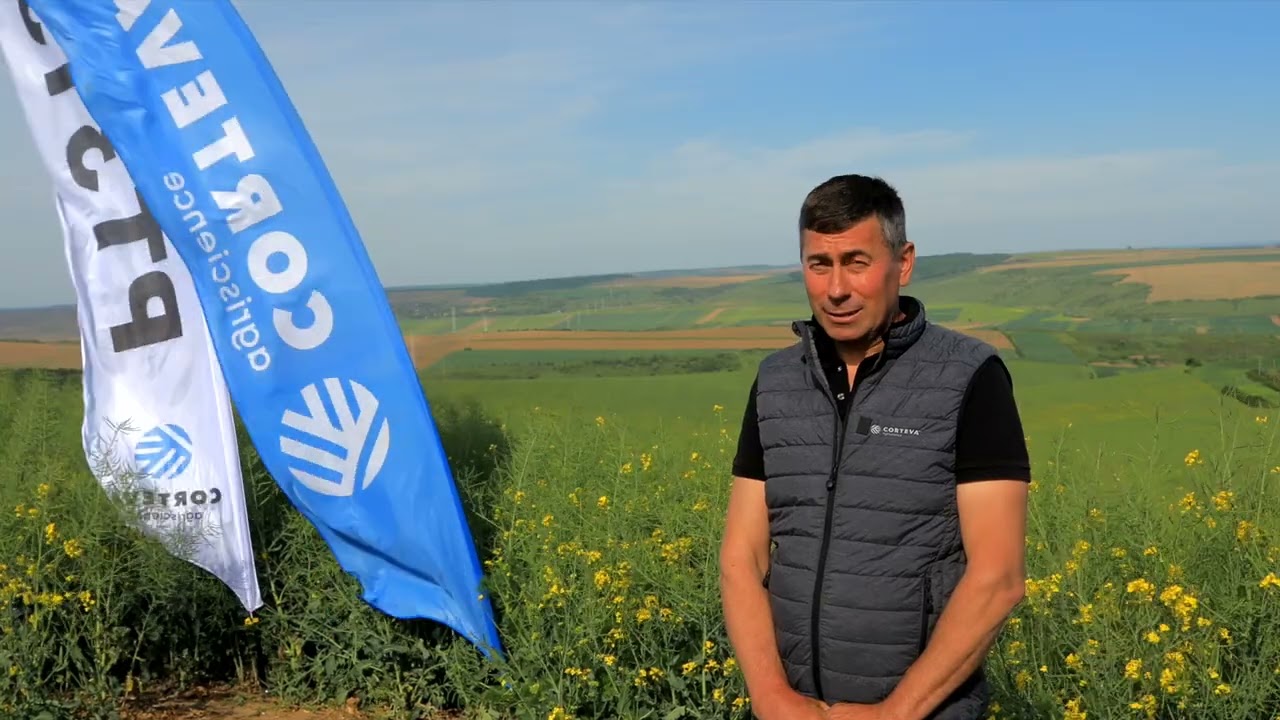
In the village of Negulești, part of Dealul Morii, an 800-hectare farm run by a father-and-son team is drawing attention after an exceptional agricultural season marked by record yields and ambitious expansion plans.
Farmer Marius Eugen Chiric reported rapeseed yields of 5,500 kilograms per hectare on 82 hectares of non-irrigated land, alongside wheat production exceeding 10,000 kilograms per hectare—figures considered remarkable even by irrigated farm standards.
“The field speaks for itself,” Chiric said, attributing the results to careful planning and consistent work rather than favorable conditions alone.
Buoyed by the strong performance, the farm will significantly expand rapeseed cultivation to 250 hectares in the upcoming season, up from 82 hectares this year. “We’ve gained confidence,” the farmer said, emphasizing that such decisions are rooted in long-term experience rather than short-term optimism.
The farm is operated jointly with his 25-year-old son, Narcis-Marius Chiric. The two share an uncommon bond: both graduated from agricultural university in the same year, with the father returning to education later in life while the son continues with postgraduate studies.
Their collaboration blends experience with modern approaches, reflected in the farm’s updated techniques. Compared to the previous year, they implemented an additional fungicide treatment, increased organic algae-based fertilization to four liters per hectare, and intensified crop monitoring. Production costs rose slightly above 3,500 lei per hectare but were offset by higher yields.
Despite the success, challenges persist. Rapeseed crops faced pressure from the pest Meligethes aeneus, requiring five treatment cycles—more than initially planned. Water availability also remains a concern, with adequate surface moisture but deficits deeper in the soil that could affect future harvests.
Climate change has also reshaped crop strategy. Corn has become increasingly risky, while rapeseed has emerged as the farm’s primary crop. The transition is evident: from 45 hectares in 2024 with modest output, to 82 hectares in 2025 with record yields, and a planned 250 hectares in 2026.
“Rapeseed is the queen of the field,” Chiric said.
In the coming weeks, beehives will be introduced to the fields to support natural pollination, boosting yields and contributing to biodiversity.
Despite strong production prospects, the Chiric family has opted against forward contracts, choosing instead to wait for more favorable market conditions—a cautious strategy reflecting both experience and market awareness.
Beyond agricultural performance, the story highlights generational continuity in a sector often marked by youth migration away from rural areas. In Negulești, however, a father and son are building a shared future rooted in both tradition and innovation.