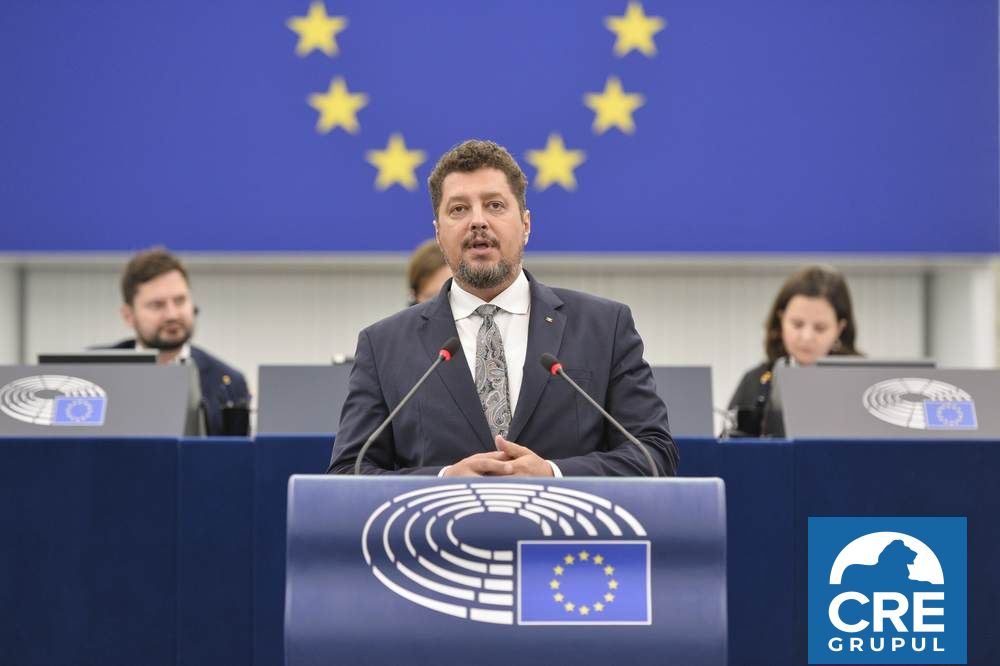
Claudiu-Richard Târziu, ECR Member of the European Parliament, has requested clarifications from the European Commission regarding the OLAF report on fraud in the Danube Delta.
The Integrated Territorial Investments (ITI) Danube Delta programme, launched in 2021, was supposed to serve as a model of regional development funded by the European Union. Built on four major pillars — infrastructure development, biosphere protection, sustainable tourism, and support for traditional communities — the project promised to transform one of Europe’s most valuable natural areas into a hub of modern development.
Instead of this optimistic scenario, however, ITI Danube Delta has, in recent years, become an epicentre of scandals, corruption allegations, and administrative opacity — a situation that has drawn the attention of both European and national authorities.
OLAF steps in: investigations begin in 2021
In the summer of 2021, following journalistic investigations that signalled serious irregularities in the management of funds — estimated at over one billion euros — the European Anti-Fraud Office (OLAF) launched an official inquiry. In parallel, the European Commission suspended payments under the programme, arguing that there were sufficient indications of potential fraud or misuse of EU money.
One year later, in May 2022, an audit by the Directorate-General for Regional and Urban Policy confirmed breaches of the rules governing EU funding. The situation worsened in January 2025, when OLAF revealed the existence of a fraudulent scheme in a project co-financed under ITI Danube Delta, involving forged documents used to access funds. The estimated damage: nearly 600,000 euros.
The big question mark: Where is the final report?
Although OLAF’s final investigation report was announced for February 2023, it has still not been released — a fact described as “very strange” by MEP Claudiu Târziu.
This week, Târziu formally addressed the European Commission, requesting:
-
the full and uncensored publication of the findings of investigations carried out over the past four years;
-
explanations for the unjustified delay in publishing the report on ITI Danube Delta.
According to him, the lack of transparency risks undermining both the credibility of European institutions and the trust of taxpayers who finance these programmes.
“Justice is not selective”
In his statement, the MEP firmly stresses that all EU citizens have the right to know how Union funds are spent and that publishing the report is essential to restoring confidence in the EU’s oversight mechanisms.
“Justice is not selective,” Târziu says, suggesting that the postponement of the report raises serious questions about possible political or institutional protection.
The ITI Danube Delta case remains, despite the investigations conducted, an unresolved file as far as the public is concerned. Without the final OLAF report and without clarifications from the European Commission, one question remains open:
Who is keeping hidden — and why — a report that could expose large-scale fraud in the management of EU funds?
Transparency, accountability, and access to information are not optional in a European Union that claims high standards of integrity. Publishing the report is no longer merely an administrative matter, but one of major public interest.