The recent debate in the European Parliament on the future of motor vehicles was more than a simple exchange of technical arguments. It signaled that, at last, the voice of reason is beginning to be heard at the level of European decision-making. For those who have long warned about the excesses of the Green Deal, this debate confirmed that economic reality can no longer be ignored.
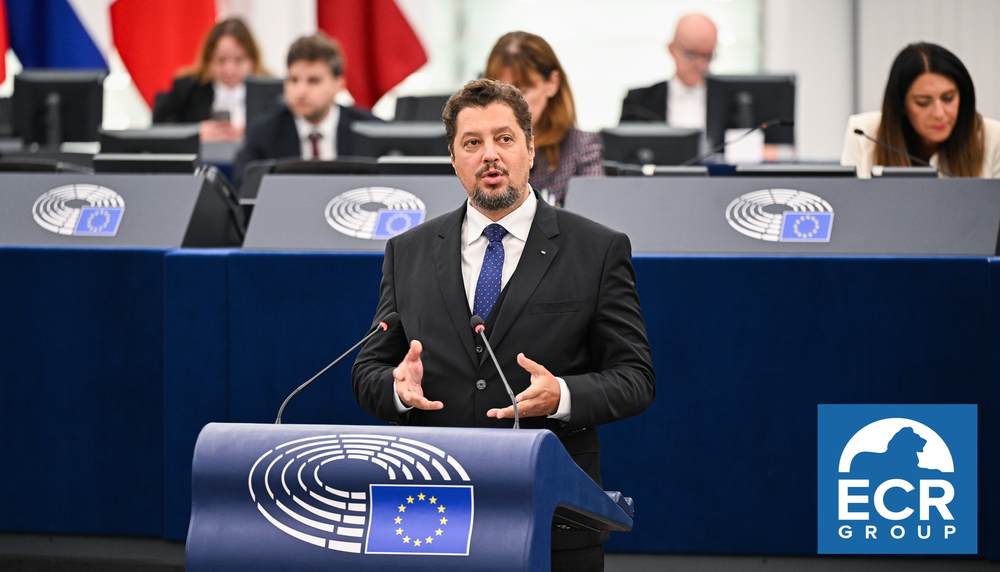
In his address to the plenary of the European Parliament, Claudiu-Richard Târziu, ECR Member of the European Parliament, highlighted an uncomfortable but essential truth: the European Union cannot afford to condemn its citizens to impoverishment, nor can it sacrifice economic competitiveness on the altar of a costly utopia. The Green Deal, in its current form, risks becoming a self-destructive experiment for the economies of the Member States, especially in the absence of mature and affordable technological alternatives.
Environmental protection is, without doubt, a legitimate and necessary objective. However, it cannot be achieved by destroying the very foundation of European citizens’ prosperity: a strong, functional and competitive economy. Without industry, without jobs and without genuine capacity for innovation, the European Union will have neither the resources nor the cohesion needed to achieve its climate goals. Moreover, without a solid economy, the very existence of the European project is called into question. While the EU imposes ever more restrictive standards on itself, China and the United States are moving ahead rapidly, combining investments in green technologies with pragmatic, growth- and competitiveness-oriented economic policies. The gap between Europe and the major economic powers will not be closed by slogans or moralizing statements, but by balanced policies adapted to the realities of the global market.
In the context of the debate on the automotive sector, the stakes are particularly high. A realistic balance must be found between carbon emission standards and the viability of Europe’s automotive industry. The EU exists to ensure the well-being of its citizens, not to impose ideological dogmas detached from reality. Europe’s future cannot be written with the ink of ideology, but with clarity, pragmatism and respect for those who work, produce and sustain the real economy.
Ultimately, the message conveyed by Claudiu Richard Târziu is a call for responsibility: Europe needs smart climate policies that protect the environment without destroying competitiveness. Only in this way can the European Union remain relevant, strong and capable of offering a prosperous future to its citizens.