On an ordinary morning in March, a special emotion could be felt in the corridors of the “Spiru Haret” Theoretical High School in Moinești. It was more than the nostalgia of a former student returning to the place where she once studied—it was the meeting point of two stages of the same story.
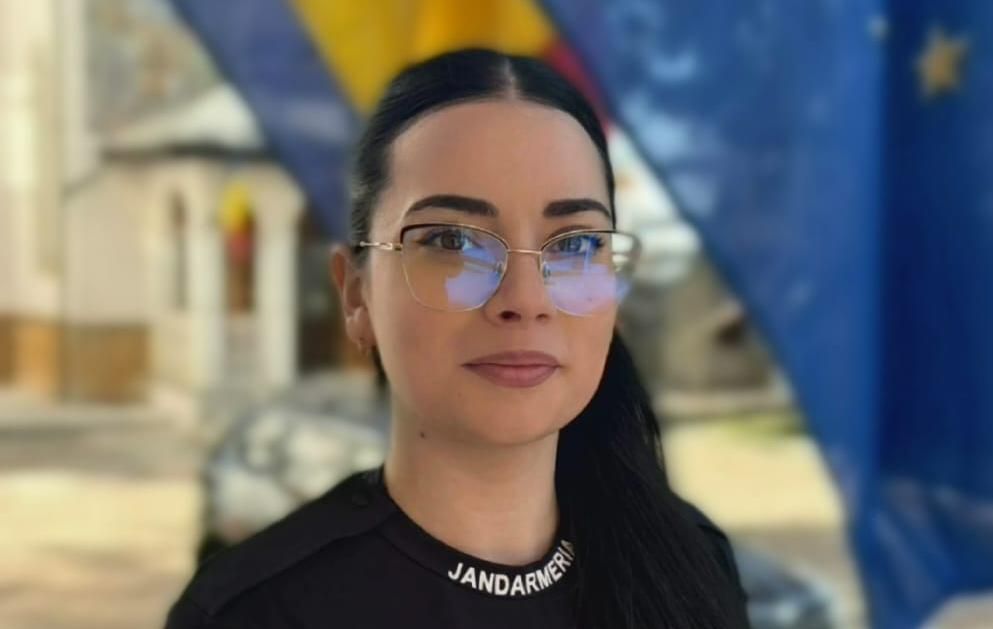
At just 21 years old, Maria Ionela Lupeș, now a student at the “Alexandru Ioan Cuza” Police Academy in Bucharest, returned to the high school that once shaped her to speak with students about the path she chose.
Her calm determination is visible in the way she speaks—like someone who understands that the road ahead is demanding but meaningful. Maria did not come with academic speeches or textbook definitions. Instead, she brought personal experiences and emotions, sharing her story simply and sincerely.
“When I was a student here, I listened with admiration to the stories of gendarmes and officers who visited our school. They spoke about responsibility, dedication, and respect for the community. At the time I didn’t know if I would ever get there myself, but I felt that I wanted to try,” she told the students.
Today, the roles have reversed. Maria now stands in front of them, describing life as a student at one of Romania’s most prestigious institutions for training future officers. She speaks about demanding physical training, intensive study, and strict discipline—elements that, she says, do not limit freedom but help organize it.
“It’s not easy, but it’s beautiful. Every day teaches you something about yourself and about the responsibility you have toward others,” Maria said with a modest smile.
Her choice is all the more remarkable because policing is still often perceived as a male-dominated field. Maria never saw this as a barrier. For her, wearing the uniform is about responsibility and competence, not gender competition.
Behind her decision lies a deeply personal story. Her father was a gendarme, and it was from him that she learned to respect the uniform. Although he is no longer with her, Maria says she feels his presence in every step she takes.
“I feel that my father is watching over me. I’m sure he would be proud of what I’m doing,” she said, her voice carrying quiet emotion.
Beyond her academic training, Maria has built her character through sport. Athletics and long-distance running, including participation in half marathons, have strengthened her determination and endurance. For her, sport has been more than physical activity—it has been an exercise in patience and discipline.
She also maintains balance through simple things: reading, hiking, and moments of quiet that help her clear her mind after intense days of training.
An important stage in her development was her first internship at the “Ștefan cel Mare” County Gendarmerie Inspectorate in Bacău, where she experienced the realities of the profession for the first time.
“I learned a lot during this period. I was involved in real situations and felt the support of the Bacău gendarmes. I felt at home,” she said.
For the students who listened to her, the meeting was more than a presentation about student life. It was a lesson in courage—the courage to follow one’s calling and turn a dream into a real path.
By returning to her former high school, Maria did more than pay a visit. She built a bridge between generations, showing young people that the road toward a profession dedicated to the community can begin with a simple curiosity or a story heard in a classroom.
In March, when discussions often highlight the courage and contributions of women, Maria’s story takes on special meaning. It represents the promise of a new generation of women choosing to dedicate their lives to protecting others.
At 21, Maria Lupeș is still at the beginning of her journey. But the steps she is taking are already firm enough to make her an example—proof that vocation, discipline, and respect for tradition can build a strong future for both the individual and the community she represents.