In Fever Pitch, Nick Hornby, a lifelong supporter of Arsenal F.C., confessed that over the years he had addressed no more than four sentences to his favorite players. That did not stop him from staging imaginary conversations with the “Gunners.”
“I still take Alan Smith to the pub now and then,” Hornby wrote, “buy him a low-alcohol beer, sit him down and talk until Judgment Day and beyond about George Graham’s alleged stinginess, Charlie Nicholas’s form or John Lukic’s transfer.”
I, too, sometimes hold imaginary conversations. But not with footballers in purple or in yellow and blue. My dialogues are with people dear to me who are no longer among us. They usually unfold over coffee. Sometimes in the shadow of a wall calendar.
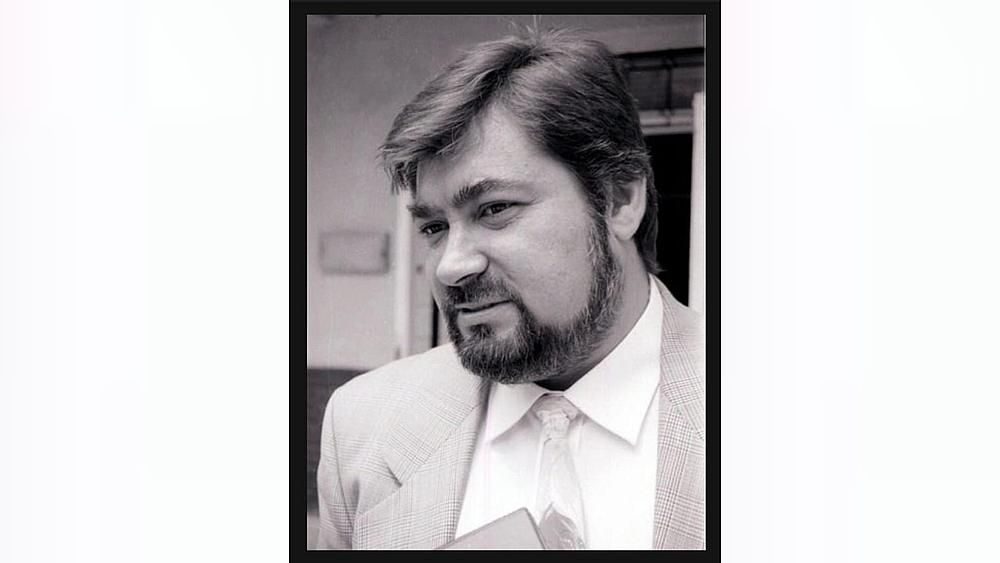
On February 16, we mark 13 years since Dumitru Sechelariu left this world. Thirteen. Since 2013. Every number carries its own symbolism, but 13 seems to bear a particular weight. So it is time for a coffee.
To be clear: I do not recall sitting down for more than a single coffee with Seche while he was alive. Of course we spoke often, but mostly about work. Usually by phone. I would call; he would answer. A parenthesis worth opening: he always answered, and he answered everyone. If he could not take the call or missed it, he would call back later, regardless of who had tried to reach him. Any journalist — not only journalists — who ever phoned Dumitru Sechelariu can confirm this. A lesson in best practice.
And, ultimately, a form of respect.
There were chats, of course — some unforgettable, others untellable — but sitting face to face, just the two of us, stretching a conversation over coffee or perhaps a drink from midday deep into the night? No, certainly not. In the meantime, however, I have begun to… make up for it.
I now “take out” this man I cared about — and whom I know cared about me — for a short espresso and a long conversation. In the steam rising from the cup, “memories carry the scent of Kouros and outlines of smoke, Muratti smoke,” to borrow an older phrase that found its way into the heart of his son, Doru Sechelariu. These imaginary talks do not always follow the same lines. Sometimes they are sketched roughly, thickened or doubled, like certain charcoal drawings by Ottone Rosai.
Other times they are lively and sharp, like the lines delivered by Gheorghe Dinică in his films. And I often wonder what witty remark Seche would have made about the fact that we cannot be friends on Facebook, given that I do not use social media. He, by contrast, would surely have been there from the very beginning — perhaps even before the beginning. Not a joke, but a state of mind: Seche was always an avant-gardist.
We talk about football and about the city, about then and now, about what was and is no more — and perhaps never will be again. About newspapers, people and times. Sometimes even about the weather, especially when my knee aches beyond reason. And I imagine him telling me, with that unmistakable smile that made him resemble George Constantin so closely: “Look at you, you’ve grown a little older.” And indeed, I have.
Older. A little. But that cannot erase the fact that when Dumitru Sechelariu left this world, he was still relatively young. He was approaching 55. My age now.
So I carry on, telling him about my family, and I can almost hear him speaking in return about his — “a beautiful family.” And since family has come up, a memory surfaces. A dear one, never before put into writing. A vignette that finally finds its place.
In April 1997, FCM Bacău lost 2–1 away to Gloria Bistrița in a match where the yellow-and-blues of Macea Nedelcu were, as we used to say, robbed blind by referee Alexandru Dobrin. Those were the days when FCM Bacău — with Scânteie, Condurache and Jercălău, with Narcis Răducan, Pavel and Gireadă, with Popovici, Serea and Căpușă — could play heavenly football and defeat Steaua București 5–1 and 1–0, Dinamo București 2–0, and Rapid București 1–0.
But they were also the days of Jean Pădureanu and the so-called “National Cooperative” of match-fixing. And the days when Sechelariu was locked in open war with that system and in explosive legal battles with the Federation led by Mircea Sandu.
The Bistrița match was played on a Saturday. On Sunday, once I reached the newsroom, I called Seche, convinced he would explode after such a massacre. I could already see the headline in bold, ready to slap back the insult done to Bacău.
Instead, the honorary president of FCM seemed oddly calm. He said something banal, courteous — I honestly do not recall what. I was baffled. I asked whether something had happened.
And then — this I remember as if it were yesterday, not nearly three decades ago — Dumitru Sechelariu replied: “No, not at all! On the contrary, I’m happy. I’ve just become a father for the second time. My wife gave birth to a baby girl. So you understand — we’ll talk about football another time.”
When I went downstairs to the editorial secretariat with the stack of articles for “Moldova Sport,” the sports supplement of the daily newspaper, I discovered that no one — absolutely no one — knew that over the weekend the mayor of Bacău had become a father squared.
So I went back upstairs to the Sports desk, and through cigarette smoke — certainly not Muratti Ambassador, more likely something unfiltered — I typed on an Olympia typewriter the small pink-ribbon story that would appear the next day in black and white.
Nearly 29 years have passed since that spring day when Dumitru Sechelariu declared himself happy. And now, 13 years since we began speaking of him in the past tense.
I, however, still speak to him, from time to time, in the present.
Another coffee, boss?