There is a question that returns obsessively, especially in December, when social media fills with urban indignation and rural nostalgia alike: how is it that Romanians, a people often said to have been born of shepherding, place the slaughter of the pig at the very centre of their winter rituals? At first glance, it seems like a contradiction. On closer inspection, it is one of the most coherent expressions of how this community survived for centuries.
The cliché of the “nation of shepherds” comes from mythology, not statistics. It belongs to ballads, not to account books. In reality, Romanians were a complex peasant people, practising a mixed economy: shepherding, agriculture, hunting, fruit growing and the raising of household animals. The sheep gave rise to myth, but the pig made winter possible. This text is neither a gastronomic ode nor a sentimental apology. It is an attempt to explain why the slaughter of the pig is not random barbarity, but a ritual of survival, community and memory.
The pig: the animal that kept the village alive
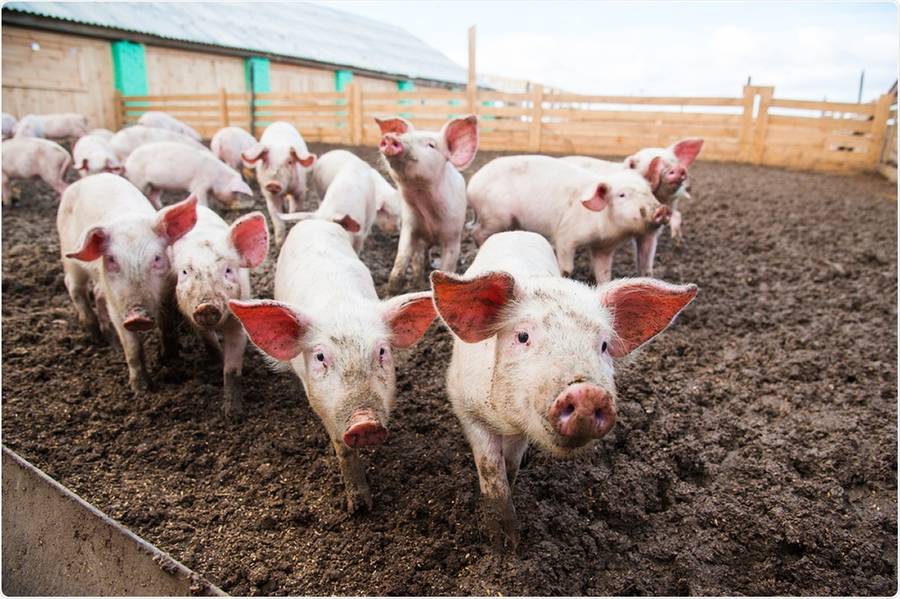
The pig is not a noble animal. That is precisely why it was essential. It does not require alpine pastures, does not compete with sheep, and demands no symbolic effort. It feeds on leftovers, acorns and whatever remains after humans have eaten. It grows fast, fattens well and, most importantly, provides a large quantity of meat at once. In a world without refrigerators, electricity or constant supply chains, this was not excess, but necessity.
The pig is slaughtered in winter, when the cold preserves. The sheep is slaughtered in spring. Lamb is for Easter; the pig is for Christmas. The spiritual and the biological do not overlap. Romanians did not choose the pig out of greed, but out of practicality. And durable traditions are almost always old solutions to real problems.
A ritual older than Christianity
The slaughter of the pig predates Christianity. It is an Indo-European winter sacrifice ritual, linked to the death of the old year and the survival of the community. Christianity did not create it; it tamed it, fixing it in the calendar on Ignat’s Day. Blood, fire, fat, shared meat — all are ritual elements. Pomana porcului is not a feast, but a confirmation meal: the animal has been transformed into food, the family will make it through the winter.
Why the city no longer understands the village
Modern outrage at the slaughter of the pig does not stem from superior morality, but from a break with necessity. When meat arrives neatly packaged, death disappears. When death disappears, ritual turns into barbarity. The village was never cruel. It was lucid. It understood that life feeds on death and had the decency to look this truth straight in the eye.
The Balkans and the pig: similarities and differences
The ritual of pig sacrifice is not uniquely Romanian. Across much of the Balkans — Serbia, Bulgaria, North Macedonia, northern Greece — similar practices exist, carried out in winter, within extended families, with the same emphasis on preserving meat. The fundamental similarity lies in a shared agrarian matrix: poor rural communities dependent on an animal capable of providing long-term protein.
The differences, however, are symbolic and narrative. In Serbia, the ritual tends to be more pragmatic, less laden with magical formulas or the involvement of children. In Bulgaria, the focus is on the final products — sausages and cured fat — rather than the act of sacrifice itself. In rural Greece, the pig is often integrated into a broader celebration with music and wine, making the ritual more “open”.
Among Romanians, by contrast, the slaughter retains a liminal character: a threshold between years, between life and death, between childhood and adulthood. Children are not excluded, but initiated. Expressions such as “may you grow big and fat like the pig” do not appear in the same form among neighbouring cultures. They reveal an archaic magical thinking still alive. Romanians did not turn the pig into spectacle or carnival. They preserved it as a domestic, serious, almost sober ritual. This may be the essential difference: while other cultures socialised the sacrifice, Romanians internalised it.
The pig as a lesson in survival
Romanians are not a paradox. They are the result of a long adaptation. The shepherd of myth and the pig in the yard do not contradict each other; they complement one another. The slaughter of the pig is not about violence, but about order. About acknowledging that winter inevitably comes, and that communities which recognise this survive.
In a world that has forgotten where food comes from, this uncomfortable ritual remains one of the few honest lessons about life, death and responsibility.
Ignat’s Day — a report from a living ritual
Morning begins in darkness. The yard is cold; breath is visible. The pig knows. There is no naivety in the animal. Its grunting is shorter, more nervous. Some say it must be “made drunk”, others that it must be calmed. In reality, these are last attempts to soften the violence of the inevitable.
The men gather early. No one comes alone. Slaughtering the pig is team work. Knives are sharpened carefully, as if precision itself were a form of respect. The women prepare hot water, containers, spices. Children are sent outside, but not too far away. They must see.
The killing is brief. It is not prolonged. It does not become spectacle. Then comes the fire. Straw burns, the skin is singed, and the heavy, sweet, unmistakable smell announces itself to the entire village. The children are called back. They are lifted onto the pig’s body. “May you grow big and fat like the pig.” It is not a joke; it is archaic magic — a wish spoken aloud so that it may come true.
What follows is butchering. Muscle is separated, fat is cut carefully, meat is sorted. Nothing is thrown away. Every piece has a precise destiny. The work is collective, synchronised, almost silent.
In the kitchen, the real industry begins. The mincer, garlic, salt, paprika. Sausages are stuffed, tied, hung. Tobă and chișcă are prepared from parts the city has forgotten. Fat melts slowly in heavy cauldrons. Cracklings are lifted out hot — the first to be tasted. Hams are salted and prepared for smoking. The smoke will work for days, slowly preserving.
Pomana porcului comes in the evening. The food is simple: straight from the pan, with polenta and pickles. It is not a feast, but a moment of quiet reflection. People eat together, because they worked together.