Acasă Blog Pagina 3856

Un centru pentru copiii defavorizati din Filipeni

    Unii dintre cei mai sarmani copii din satul Marasti, comuna Filipeni, au norocul sa fie printre beneficiarii unui centru in care isi dezvolta abilitatile artistice, isi petrec frumos timpul liber de dupa orele de curs si primesc inclusiv o masa.

    Este vorba despre Centrul „Curcubeul”, pus pe picioare de un canadian, Paul Katz, prin intermediul Asociatiei „Favor”, pe care o gestioneaza si prin care deruleaza programe sociale in zona Bacau inca din anul 1999.

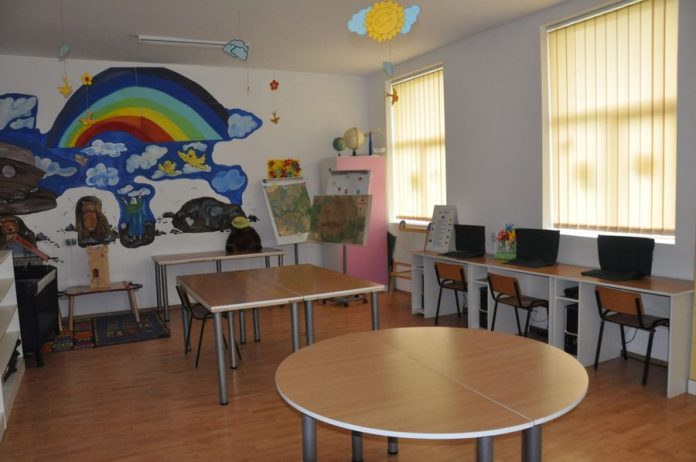
    Unitatea a luat fiinta in spatiul unui fost atelier scoala, cedat prin hotarârea Consiliului Local Filipeni. Locul este destinat unui numar de 26 de copii nevoiasi, care beneficiaza de asistenta educationala.

    “Centrul Curcubeul este un loc cald, prietenos, in care copiii din familiile cele mai sarace din trei sate pot petrece dupa-amiezile lor in activitati constructive”, declara la inaugurare Paul Katz, presedintele asociatiei.

    Practic, este vorba despre un centru care functioneaza pe principiul „Scoala dupa scoala”, cu o bucatarie moderna si doua sali de clasa frumos decorate, complet mobilate si dotate cu calculatoare. „A existat mare concurenta intre copii sa intre in Centru, dar s-a facut o selectie atenta, in colaborare cu dirigintele si profesorii.

    Copiii fac lectii, invata cântece sau lucrul pe calculator, invata engleza. Este un mod de educatie excelent, la care contribuie profesorii special adusi, sot si sotie, carora comuna le-a oferit locuinta intr-un bloc din Filipeni, le plateste lemnele de foc, internetul si telefonul”, spune primarul Vasile Banu. El spune ca au existat si oarece reticente fata de initiatorul acestui program social, din partea unora care s-au temut ca la mijloc sa nu fie propaganda religioasa, dar temerile s-au risipit repede, iar bunele intentii au primat.

    Acum, vara, in Centrul „Curcubeul” e liniste, dar spatiile generoase ii asteapta pe cei mici sa revina, ca sa se distreze si sa invete lucruri noi, deopotriva.

    Asociatia Favor a intocmit si o lista de 40 de familii aflate in dificultate, carora la sarbatori sau in alte ocazii le asigura cadouri constând in haine sau produse alimentare. Asociatia mai are, in judet, o locuinta pentru tinerii crescuti in institutiile de stat, precum si programe educationale pentru tinerii defavorizati.

    Amenzi uriase pentru firmele care transporta cereale fara documente

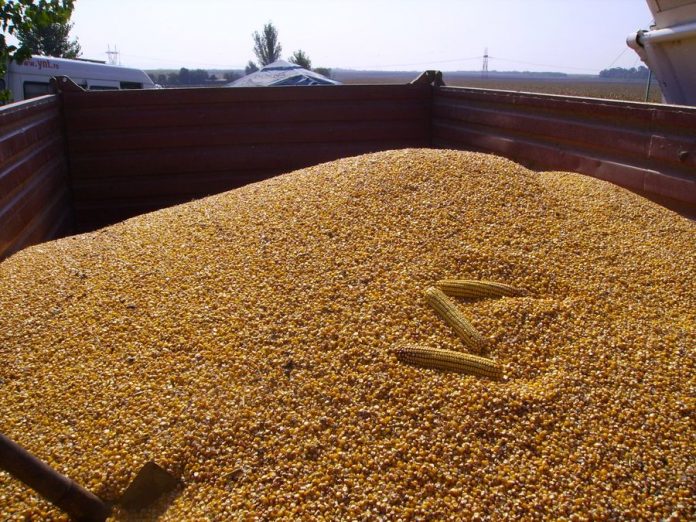
    Soferii camioanelor cu cereale risca amenzi de pâna la 5.000 de lei daca nu detin toate documentele de provenienta a marfurilor pe care le transporta. Astfel, potrivit Legii 108/2014, transportatorii de produse agricole trebuie sa aiba, pe durata transportului, toate documentele legale specifice.

    „Transportul produselor agricole vegetale obtinute dupa recoltare pe teritoriul exploatatiilor agricole, de la punctele de recoltare la alte spatii de depozitare decât cele proprii exploatatiei agricole sau la alte puncte de descarcare autorizate în vederea depozitarii sau comercializarii, pe distante mai mari de 70 km de la locul de încarcare, va fi însotit de documentele legale specifice transportului, de avizul de însotire a marfii si de tichetul de cântar“.

    Legea 108/2014

    Tichetul de cântar se obtine de la instalatiile de cântarire a produselor agricole vegetale. Produsele agricole vegetale obtinute dupa recoltare se transporta de la punctele de recoltare la spatiile de depozitare proprii ale exploatatiilor agricole în cauza cu avizul de însotire a marfii, fara ca vehiculele folosite în acest scop sa detina tichet de cântar.

    Totodata, transportul direct de la punctele de recoltare la bazele de receptie sau de depozitare ale unitatilor de procesarese va face fara a se detine tichetul de cântar, „cu conditia însotirii vehiculului cu o copie a contractului încheiat între producatorul agricol si procesatorul în cauza si cu avizul de însotire a marfii“.

    Pentru fimele care detin produse agricole fara acte de provenienta, amenzile pot fi între 10.000 si 50.000 lei. In plus, societatea risca si suspendarea activitatii, intre o luna la 6 luni, si confiscarea produselor agricole vegetale.

    Constatarea contraventiilor si aplicarea sanctiunilor se fac de catre persoanele împuternicite din cadrul institutiilor cu atributii privind regimul transporturilor rutiere pe drumurile publice din România.

    Daruri si dulciuri pentru elevii cu cerinte educative speciale

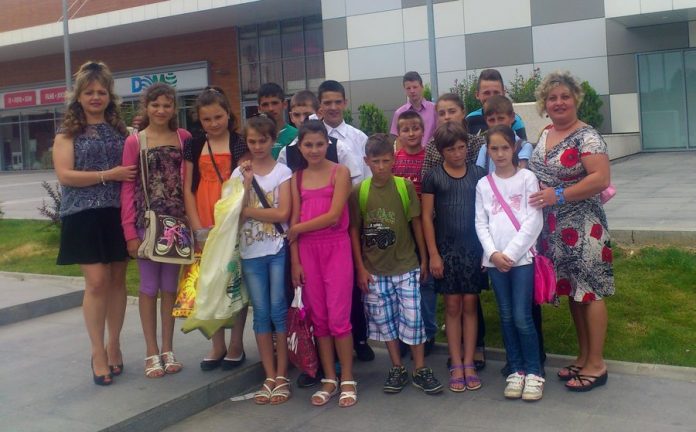
      In cadrul proiectului amplu „Scoala de vara comanesteana”, initiat de Centrul Scolar de Educatie Incluziva (CSEI) nr. 2 Comanesti, care include si alte 13 unitati scolare partenere, s-a organizat o activitate in Bacau, ce a constituit o reala relaxare pentru elevii participanti.

      Coordonatorii activitatii au fost prof. Oana Ardeleanu (CSEI nr.2), prof. Edith-Aurora Wagner (Scoala „Liviu Rebreanu” Comanesti) si prof. Cristina Ardeleanu (Scoala „Ciprian Porumbescu” Comanesti). Obiectivul principal al proiectului este integrarea copiilor cu cerinte educative speciale in societate, prin activitati educativ – recreative, prin vizite si excursii.

      Asa cum a fost si cea din Bacau, prin care copii s-au distrat, au primit sponsorizari si pachete de dulciuri din partea SC România Hypermarket SA, prin director Cora Bacau, Catalin Constantin Ismana Ilisan.

      Fata noua pentru Vivariul din Bacau

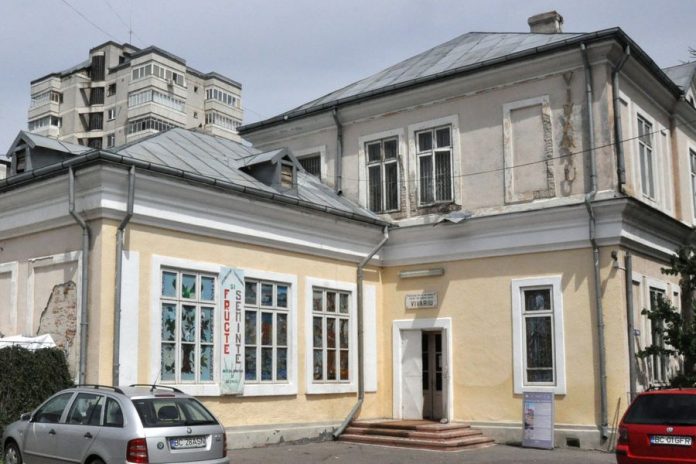
        Vivariul din Bacau este cuprins in domeniul public al judetului si este administrat de Muzeul de Stiintele Naturii „Ion Borcea”. Din 1870, in acest imobil a functionat o scoala, iar in 1965-1970 a fost extins cu alte doua corpuri, aflându-se pe Lista monumentelor istorice aprobata de Ministerul Culturii.

        Cladirea e foarte veche si nu a beneficiat de lucrari de reparare si consolidare la partea de structura, motive pentru care Consiliul Judetean (CJ) Bacau vrea sa intervina urgent. „Dupa 12-13 ani de procese, zona a fost degajata de acea pescarie improvizata.

        Directorul muzeului a venit cu un proiect care va pune in valoare aceasta cladire a Vivariului”, a explicat Dragos Benea, presedintele CJ Bacau. Deocamdata, a fost elaborata

        „Documentatia de avizare a lucrarilor de interventii” si au fost aprobati indicatorii tehnico-economici rezultati din deviz, astfel incât institutia sa fie pregatita sa acceseze oricând un program european.

        Lucrarile nu vor modifica arhitectura interioara si exterioara, constând in refacerea instalatiilor, consolidarea elementelor structurale, amenajari interioare, lucrari de asanare a umiditatii si de izolare. Valoarea totala a investitiei va fi de 8.803.776 lei (1.981.170 euro), fiind incluse si cheltuielile care se vor face cu transferul temporar al exponatelor.

        „Exista dorinta de a accesa fonduri europene, mai bine zis, de la Guvernul Norvegiei, pentru a reabilita imobilul. Peste doi ani, locul va arata cu totul si cu totul altfel, iar copiii vor simti, intr-adevar, ca merg la Vivariu.”
        Dragos Benea, presedinte CJ Bacau

        Cronica neagra

          A cazut de pe casa

          Un tânar de 31 de ani, care efectua lucrari la acoperisul unei locuinte din orasul Buhusi a cazut de la inaltimea de circa cinci metri. In urma cazaturii acesta s-a ales cu fracturi la ambele oase de la gamba dreapta si a fost transportat imediat la Spitalul Judetean Bacau unde a ramas internat in Sectia de Ortopedie.

          Gasit mort in casa

          Un barbat, in vârsta de 69 de ani, din Bacau, a fost gasit decedat in locuinta. Rudele acestuia au intrat in panica dupa ce nu au mai reusit sa ia legatura cu el. Au apelat la pompieri pentru a intra in casa, iar militarii l-au gasit in sufragerie, in stare de putrefactie. La prima vedere nu avea semne vizibile de violenta pe corp, insa era cunoscut cu afectiuni cardiace. Medicii legisti vor stabili care a fost cauza mortii.

          Slavat de la moarte in ultima clipa

          Este vorba despre un barbat, de 37 de ani, din statiunea Tg. Ocna, care a incercat sa-si puna capat zilelor prin spânzurare. Un apropiat l-a gasit atârnat in streang si a sarit imediat de i-a taiat funia. A chemat si o ambulanta, iar cadrele medicale i-au acordat primul ajutor dupa care l-au transportat la Spitalul Onesti, unde a fost internat in Sectia de Psihiatrie.

          Disputa pentru Casa de Cultura a Sindicatelor din Onesti

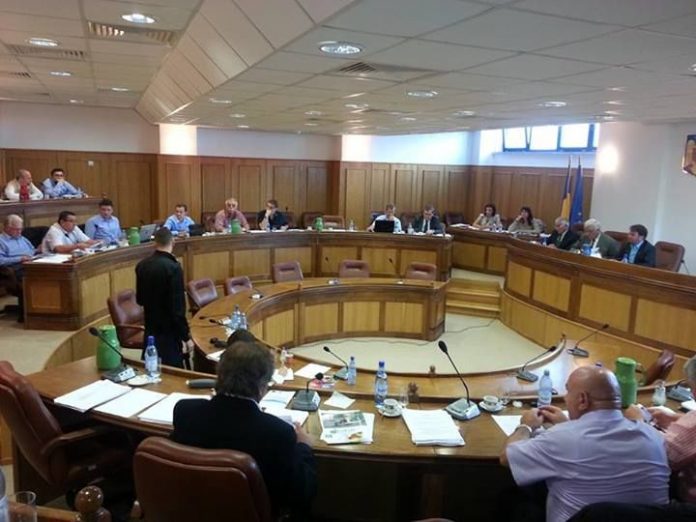
            Lupta Consiliului Local Onesti pentru preluarea Casei de Cultura a Sindicatelor din localitate continua, ajungându- se la o disputa foarte dârza pentru ca aceasta institutie sa ajunga a municipalitatii onestene. Dupa ce consilierii locali liberali s-au opus la votarea proiectului de trecere a Casei de Cultura a Sindicatelor in inventarul municipiului Onesti, subiectul a revenit in discutie din nou in Consiliul Local.

            Astfel, pe ordinea de zi a recentei sedinte de la Primaria Onesti s-a aflat un proiect de hotarâre pentru solutionarea unei plângerii prealabile a Asociatiei Nationale a Caselor de Cultura din România (ANCCR), impotriva Hotarârii nr. 82 / 18 iunie 2014 a Consiliului Local Onesti, privind declararea ca bun apartinând domeniului public de interes local din municipiul Onesti a Casei de Cultura a Sindicatelor din localitate. Prin aceasta plângere ANCCR a invocat incalcarea normelor de procedura pentru adoptarea hotarârii cu privire la majoritatea necesara, incalcarea modalitatilor de dobândire a unui bun de catre o autoritate publica cu privire la transferul din domeniul privat in domeniul public. De asemenea, a fost invocat si caracterul orientativ al bunurilor care fac parte din inventarul domeniului public.

            „Hotarârea Consiliului Local incalca normele de procedura privind adoptarea ei, impunându-se o majoritate de doua treimi, iar apartenenta la domeniul public al unui bun are in vedere bunuri care au fost dobândite sau construite din investitii propuse si nu bunuri asupra carora o terta persoana invoca drept de proprietate”, se arata in plângerea ANCCSR catre Consiliul Local Onesti, solicitându-se radierea din Cartea funciara a inscrierii provizorii a dreptului de proprietate asupra Casei de Cultura a Sindicatelor.

            In timp ce consilierul local Vasile Buzdugan (PP- DD) a mentionat ca „directorul Casei de Cultura a Sindicatelor, Teodor Adobricai, nu a adus la cunostinta Consiliului Local modul cum a cheltuit banii la organizarea Festivalului International «TI AMO», iar Casa de Cultura a Sindicatelor din Onesti este un obiectiv al municipiului, ce nu trebuie lasat la mâna unui singur om” (a directorului Teodor Adobricai, n. n.), consilierul local Mihai Sova (PNL), a avut o alta pozitie.

            „Una este problema justificarii banilor pentru festival si alta e problema trecerii Casei de Cultura a Sindicatelor in inventarul municipiului Onesti! Plângerea Asociatiei Nationale a Caselor de Cultura din România trebuie discutata in sedinta Comisiei juridice a Consiliului Local, lucru care nu a fost facut, nefiind nici un proces verbal al acestei sedinte.”
            Mihai Sova, consilier local

            La votarea acestui proiect de hotarâre, prin lipsa mai multor consilieri locali de la sedinta (au absentat democrat – liberalii Gheorghe Ene, Stefan Martin, Adrian Brânzaniuc, liberalii Danut Oprea, Ciprian Zarzu si Mircea Agapi, de la UNPR) si prin abtinerea la vot a consilierilor Mihai Sova si Vicentiu Jitcovici (PNL), nu s-a intrunit majoritatea necesara de doua treimi.

            Astfel declararea ca bun apartinând domeniului public al unui imobil de interes local (cum este trecuta Casa de Cultura a Sindicatelor din Onesti in proiectele de hotarâre aflate in dezbaterea consilierilor locali onesteni), devine un punct si mai fierbinte al viitoarelor sedinte din Consiliul Local.

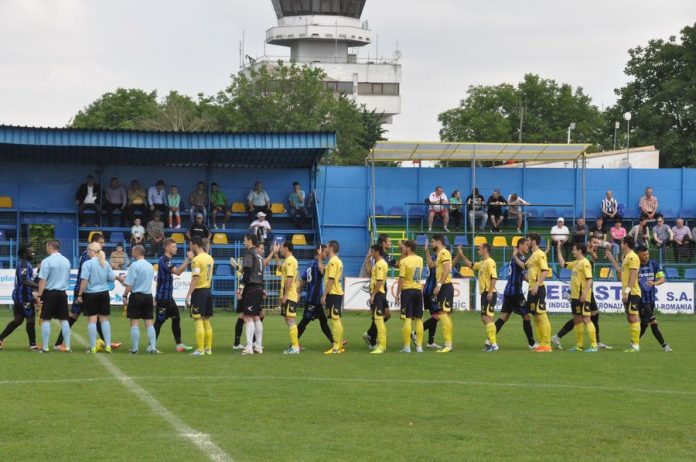
            Fotbal, Liga a II-a / Se misca lucrurile la Sport Club!

            La o zi dupa ce Curtea de Apel Bacau a decis prelungirea arestului preventiv in cazul lui Romeo Stavarache si Liviu Goian, la echipa finantata de CL au aparut, in sfârsit, si banii

            Desteptarea a avut dreptate!

            In numarul de ieri, cotidianul “Desteptarea” publica motivul pentru care, timp de o luna, nu s-a luat nicio decizie in privinta divizionarei B Sport Club Bacau.

            Conform unei surse credibile, “nimeni din Asociatia Sport Club Bacau si din conducerea Primariei nu a miscat vreun deget in aceasta perioada deoarece cu totii se asteptau ca Stavarache si Goian sa fie elibe­rati pe 1 august.Asta era jocul: cei doi ieseau si preluau din nou frâiele”.

            Informatia s-a dovedit corecta. Marti, la o zi dupa ce instanta a decis ca primarul Bacaului, Romeo Stavarache si presedintele Asociatiei Sport Club, Liviu Goian sa-si continue arestul pâna pe data de 22 august, la echipa bacauana au inceput, in sfârsit, sa se miste lucrurile.

            Nu, Liviu Goian nu s-a retras din functie, subiectul referitor la conducerea Asociatiei Sport Club Bacau ramânând, in continuare, unul tabu. Cel putin deocamdata. Au aparut, in schimb, banii! Nu toti,
            ce-i drept, dar suficient cât sa se acopere o parte din gaurile salariale.

            Salvati de noul sponsor

            Marti seara, in contul fiecarui jucator a intrat o suma echivalenta cu aproximativ 60 la suta dintr-un salariu. Si exista garantii ca, pâna pe data de 5 august, se va acoperi in intregime salariul pe o luna.

            Initial, fotbalistii SC-ului au tratat cu reticenta varianta farâmitarii, in conditiile in care ei au nu mai putin de trei salarii restante, insa, in cele din urma au fost nevoiti sa accepte situatia.

            Banii nu au venit dinspre Consiliul Local deoarece Asociatia nu a facut raportarile necesare deblocarii celei de-a doua transe din totalul de 28 de miliarde de lei vechi aprobati in baza Legii 350/ 2005. Suma a fost oferita de viitorul sponsor principal (din mediu privat) al echipei, care a administrat astfel o prima injectie de capital Asociatiei Sport Club Bacau.

            „E un sponsor cu greutate, la care am gasit toata intelegerea si care va fi prezentat luna viitoare cu ocazia unei conferinte de presa. Totodata, vom continua si parteneriatul cu municipalitatea, echipa urmând sa fie finantata, ca si pâna acum, de Consiliul Local. In curând vom face si raportarile.”
            Claudiu Goian, director de markerting al Sport Club

            Ramân sau nu mai pleaca?

            Asa cum aminteam, deocamdata nimeni nu stie ce se va intâmpla cu conducerea Asociatiei Sport Club Bacau, cea care gestioneaza banii virati de CL si care e alcatuita din PNL-istii Liviu Goian, Claudiu Nastasa, Marius Danciu, Gabriel Stanica Lupu si afaceristul Liviu Rusu. Ramân sau pleaca? Sau poate ca ramân si nu mai pleaca, desi apropiatii lui Goian se jura ca acesta ar fi anuntat ca nu-i mai trebuie fotbal, in timp ce Desteptarea a aflat ca Nastasa si-a dat demisia, iar Danciu si Lupu sunt gata si ei sa se dea la o parte.

            Oficial, insa, nicio miscare. Se misca, in schimb, lucrurile referitoare la vii­toarea gazda a Sport Clubului in editia 2014-2015. Bacauanii vor parasi “Aerostarul” intorcându-se pe “Letea”, care necesita, totusi unele modificari (o masa a presei acoperita etc.) in vederea omologarii la nivelul ligii secunde. Si apropo de “Letea”, vineri, la iesirea din cantonament, pe acest stadion oamenii lui Viorel Tanase vor sustine un meci de verificare contra Sucevei. Cât or mai fi oamenii lui Tanase…

            Cin’ sa fie?

            Conducerea Sport Club Bacau a precizat ca noul mare sponsor al echipei va fi anuntat cu ocazia prezentarii echipamentului de joc 2014-2015. Directorul de marketing al SC-ului a subliniat ca numele sponsorului va fi imprimat pe partea din fata a tricourilor.

            5 amicale

            Pe lânga testul de vineri, cu Suceava, Sport Clubul va mai sustine, pâna la jocul de Cupa, de pe 27 august, alte patru amicale. Pe 9 august e programat returul de la Suceava, iar pe 16,19 si 23, bacauanii le vor intâlni pe teren propriu pe Petrotub, FCM Dorohoi si Kosarom Pascani.

            Apa minerala si plata „tamaduitoare”, retrasa de la raft

              15 comercianti din tot judetul care valorificau apa plata sau minerala au fost verificati recent de inspectorii Comisariatului Judetean pentru Protectia Consumatorilor Bacau.

              Actiunea a facut parte din cadrul controalelor tematice la nivel de tara si a dus la aplicarea a sase amenzi totalizând 7.500 de lei.

              In plus, s-a decis retragerea temporara de la raft a peste 2.000 de litri de apa minerala si plata. Printre produsele interzise la vânzare se numara si apa minerala Azuga, valorificata ca fiind „de 7 ori mai buna“, care, astfel, însala consumatorii prin etichetare.

              „Produsul era prezentat ca fiind o apa care trata orice boala, consumul ducând la intinerire si la scaderea in greutate. Am decis oprirea temporara a 950 de litri de apa «Azuga», aplicarea de amenzi in valoare totala de 7.500 de lei si a unui avertisment”
              Alin Nastasa, seful CJPC Bacau

              Pe eticheta apareau mentiuni de sanatate asociate prudusului ce nu sunt continute de actele normative europene, utilizându-le abuziv, fapt interzis si sanctionat de lege.

              O alta practica ilegala utilizata de unii comercianti a fost valorificarea a trei tipuri de apa de izvor cu trei denumiri comerciale diferite, desi toate sortimentele provin din aceeasi sursa. La nivel national au fost controlati 265 operatori economici, dintre care 138 au fost prinsi pe picior gresit.

              Acestora le-au fost aplicate 96 de sanctiuni în valoare de peste 268.000 lei.

              Viitorul SUA se joaca pe câmpurile de lupta din Ucraina

              Am fi tentati sa explicam interesul extrem al SUA pentru conflictul din Ucraina si ridicarea mizei prin sanctiunile impuse Rusiei prin prisma faptului ca Obama ar copia strategia lui Bill Clinton.

              Actualul presedinte american este supus unei proceduri juridice in Congres pentru ca a fost de acord sa elibereze cinci teroristi in schimbul unui sergent luat prizonier de jihadisti.

              In 1988, in plin scandal Lewinsky, presedintele Clinton a decis sa atace o fabrica de medicamente din Sudan pe care a prezentat-o drept fabricant de arme chimice pentru bin Laden, desi dovezile erau inexistente.

              Insa, o astfel de explicatie ar fi incompleta. Interesul subit al SUA pentru Ucraina si ridicarea tonului fata de Rusia, situarea pe o pozitie „in oglinda” fata de cea adoptata in Kosovo, ignorarea sutelor de victime civile ale conflictului, ajutorul acordat Kievului, toate acestea au in spate o motivatie mult mai importanta, ce tine de supravietuirea Americii ca putere mondiala si, implicit, de viitorul economic al tarii. SUA se afla intr-o situatie destul de delicata.

              Pe plan intern, trebuie sa sustina milioane de cetateni aflati sub limita saraciei, in vreme ce statisticile spun ca clasa de mijloc a saracit in ultimii 20 de ani.

              Confruntata cu un deficit record, cu o societate tot mai polarizata, SUA se afla si sub asediul imigratiei ilegale, miile de copii latino-americani care se pregatesc sa-i treaca granita determinându-l pe guvernatorul Texasului sa ceara suplimentarea trupelor de graniceri.

              SUA se straduiesc de mai multi ani sa saboteze colaborarea dintre Rusia si UE, incercând sa ia locul rusilor in schimburile comerciale.

              Companiile americane sapa dupa gaze de sist in Polonia si România si, recent, au primit dreptul de exploatare a regiunilor din estul Ucrainei.

              In acelasi timp, America incearca sa blocheze si dezvoltarea economica si militara a Rusiei, care, impreuna cu China, incearca sa inlocuiasca SUA ca putere globala.

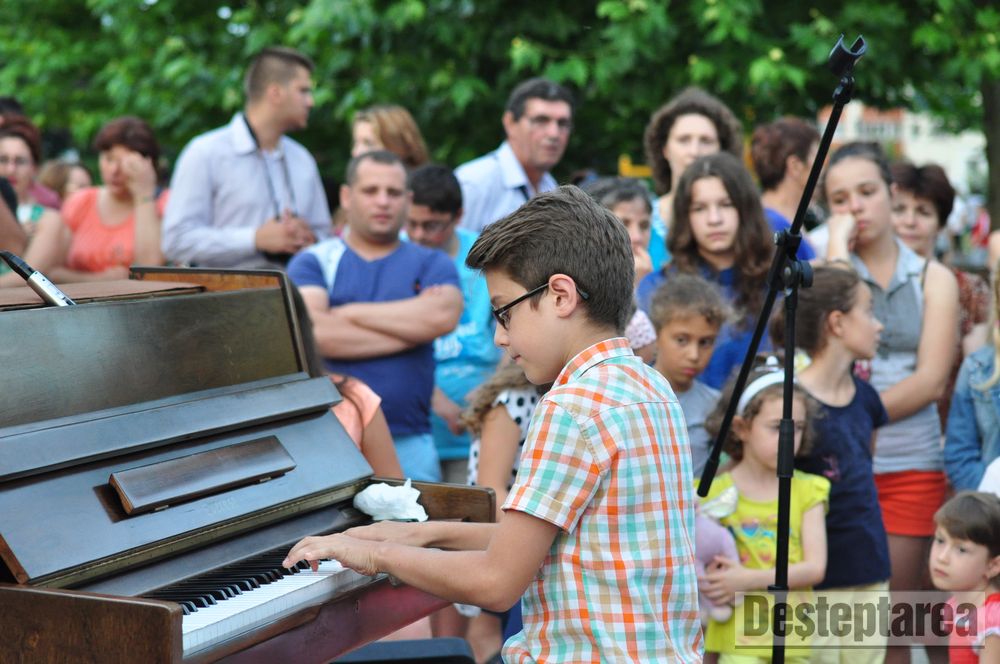
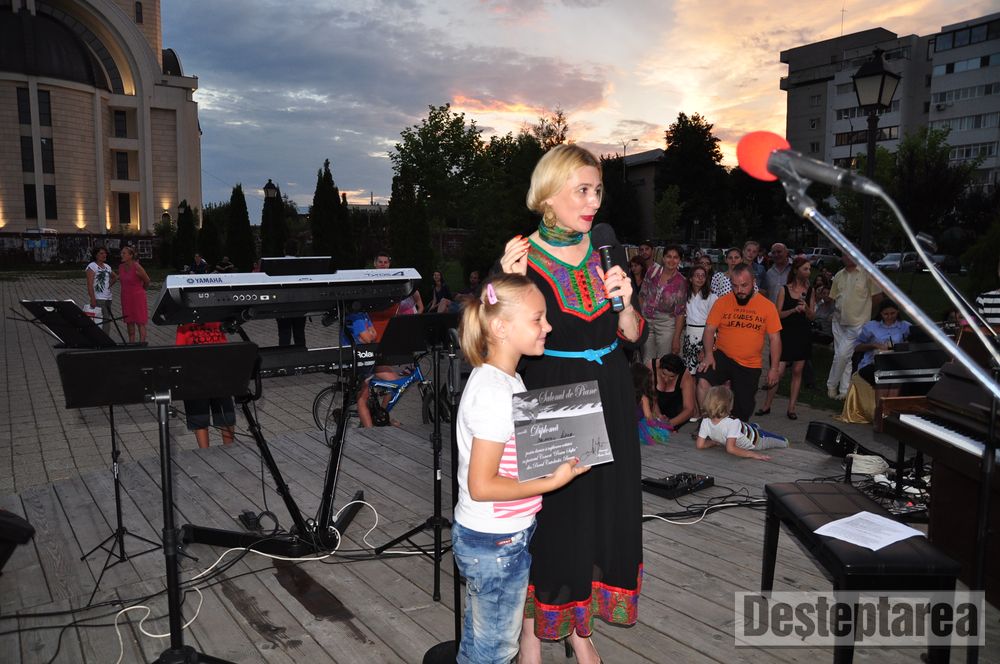
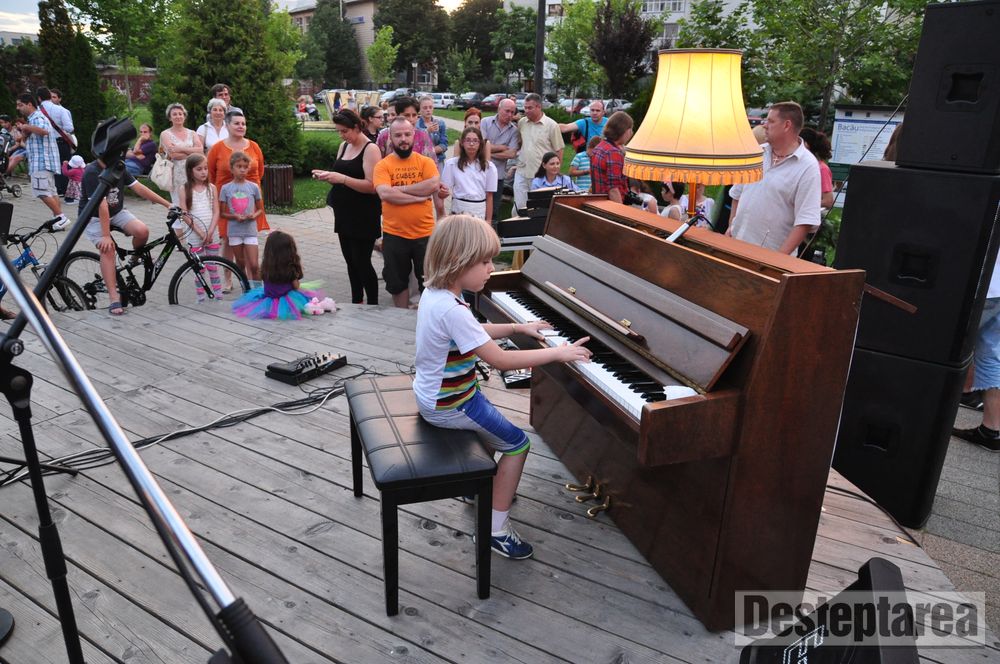
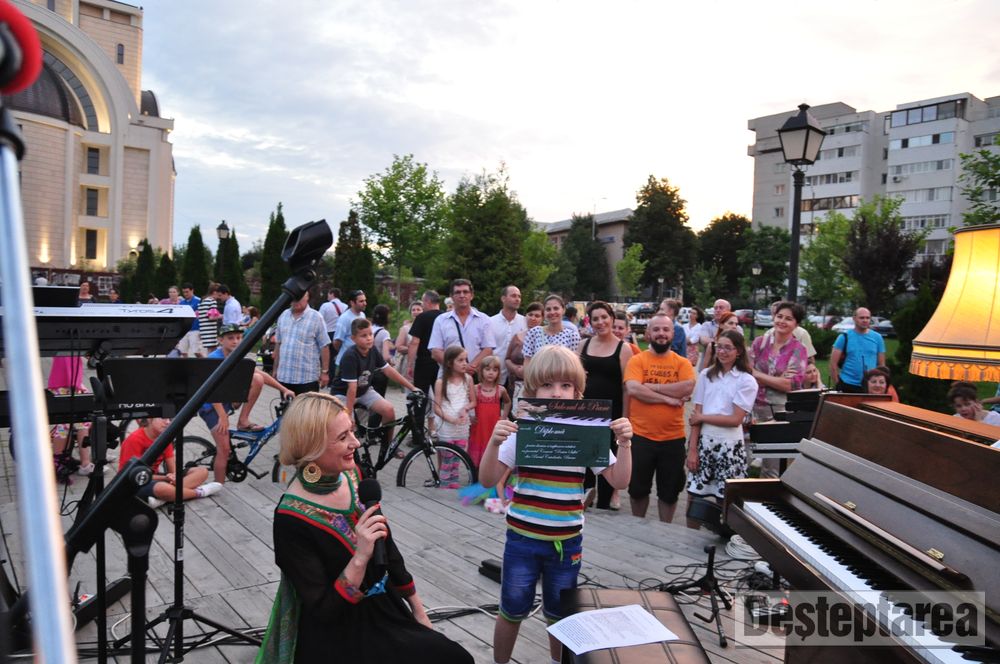
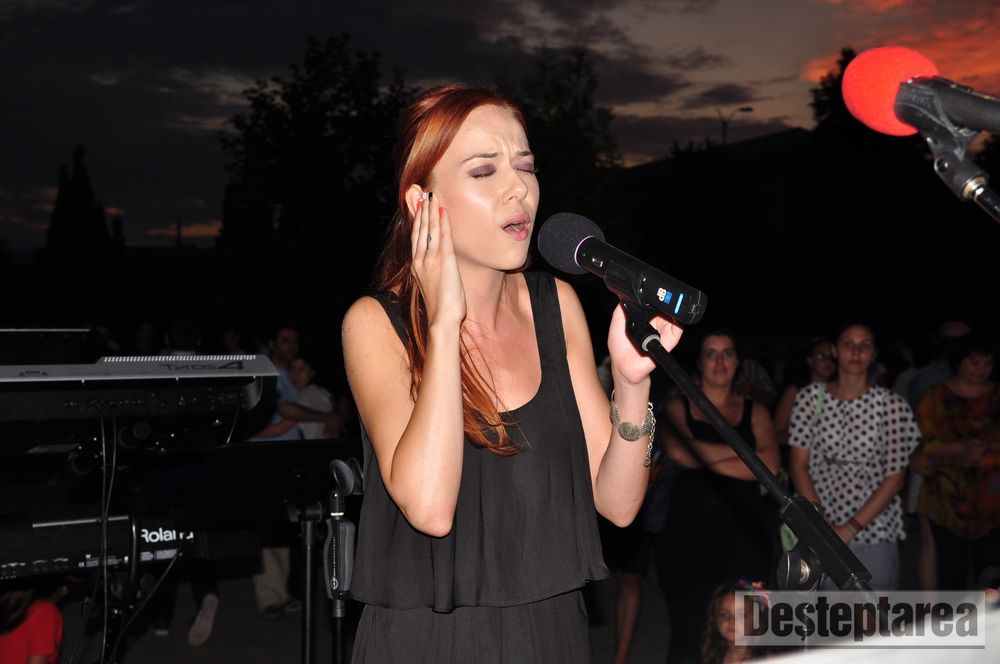
              FOTO: Bacauanii au primit in dar un nou „Concert pentru suflet”

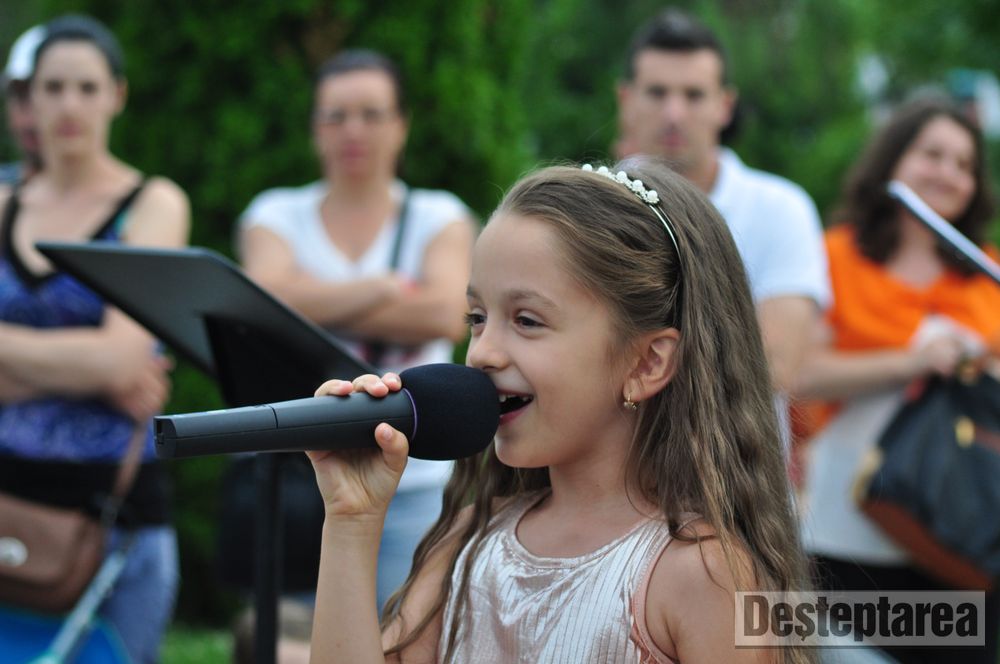
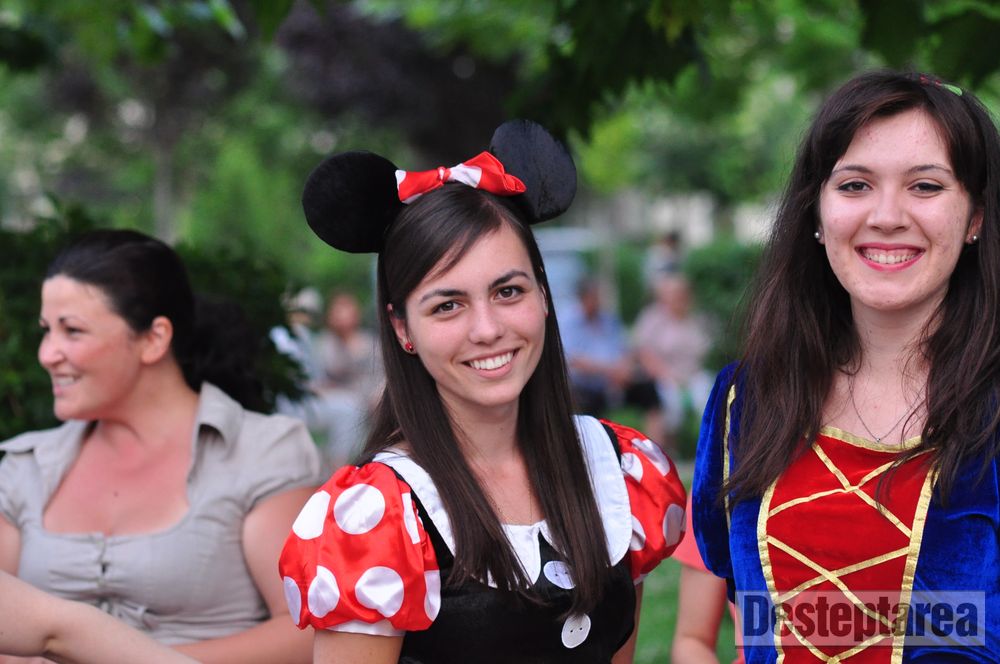
              Miercuri seara, in Parcul Catedralei din centrul orasului s-a scris o noua fila din seria concertelor pentru suflet, organizate de Salonul de Piane.

              Tematica serii a fost „pentru frumoase amintiri”, iar momentele de magie muzicala au fost semnate de copii si tineri talentati, absolventi ai Colegiului National de Arta „George Apostu”.

              Invitatii speciali ai acestui eveniment au fost membrii formatiei bacauane „Memory” – Claudiu Filip- claviaturi, Mia Ojog- voce, Bogdan Savin- voce si chitara.

              Cele doua ore de spectacol, oferite din inima publicului, au fost rasplatite cu aplauze generoase. Reprezentantii ONG-urilor bacauane s-au reunit si ei la aceasta in traditionalul de acum „Târg pentru suflet”, unde bacauanii au putut achizitiona obiecte artizanale faurite de beneficiarii acestora.

              „Aceasta editie a proiectului «Concert pentru suflet» este o editie de multumire pentru toti cei care ne-au fost alaturi si ne-au sustinut proiectele. Salut initiativa tinerilor participanti, care de la o editie la alta sunt tot mai numerosi. Multumesc si publicului ce vine de fiecare data si pe care ii asteptam intr-un numar mai mare si la editia viitoatre, din 20 August”
              Mioara Iacob, organizator si reprezentant „Salonul de piane” Bacau

              + Galeria foto pe Facebook

              Fotbal/ Cupa României – Aerostar, calificata

              Divizionara C Aerostar s-a calificat in faza urmatoare a Cupei României la fotbal. Aseara, „aviatorii” au invins in deplasare, cu 1 – 0, pe FCM Dinamo Onesti, prin golul marcat de Furtuna (min.35). (D.S)

              Un regal la Prezident. “Viata pe tabla de sah” si “Un Argonaut român in America”

              De fapt, supratitlul nu-i complet, deoarece, la Prezident (iata, un complex hotelier care-si apropie tot mai des si actul de cultura) vor avea loc trei evenimente, toate cu “români”. Sa le luam pe rând.

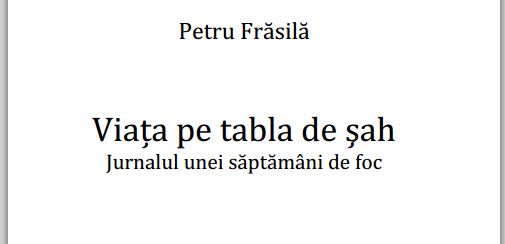
              Vineri, 1 august, de la ora 17, in sala mare a Hotelului Prezident va avea loc lansarea volumului “Viata pe tabla de sah”, semnat de Petru Frasila, ziaristul care a invins justitia româna la CEDO, caz mediatizat la vremea respectiva.

              Cartea beneficiaza de prezentarea presedintelui Uniunii Scriitorilor din România, Filiala Iasi – Casian Maria Spiridon. Dupa incheierea “formalitatilor” – discursuri, intrebari, raspunsuri, autografe, cei prezenti sunt invitati la lansarea albumului de arta “Un Argonaut in America”, al pictorului Dan Cumpata, românul de succes care a renascut in America.

              Si albumul va fi “criticat” tot de un iesean – cunoscutul critic de arta Valentin Ciuca. La final, mai multi români vor fi supusi unui test de Casa de Vinuri Vinarte, la un cockteil oferit de gazde. De tot ce se intâmpla pe 1 august, de la ora 17, la Hotelul Prezident, se fac vinovati TeleMoldova Plus, Prima TV Iasi, Club M Prezident. Amfitrion va fi poetul si ziaristul Val Manescu, singurul român bacauan trecut pe afis.

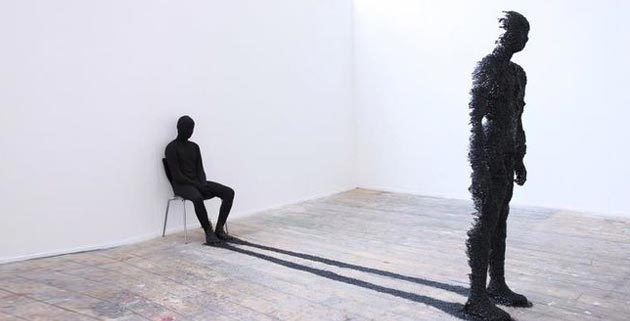
              Poate Shakespeare a fost Shakespeare

              Am citit recent un eseu destul de neobișnuit de-al lui Umberto Eco, care m-a lăsat oarecum confuză. Luând-o de-a dreptul, scriitorul pretinde că în urma unor cercetări bibliofile, a ajuns la o dovadă abstractă, aș putea spune, a faptului că scrierile lui Shakespreare nu sunt ale lui Shakespeare. Cumva, Romeo, Julieta, Hamlet sau Macbeth sunt capodoperele mai mutlor tați.

              Toate dovezile se îndreaptă spre Francis Bacon, o figură celebră în acele vremuri, care era poet, om politic și filosof. Se știe că Shakespeare nu avea rădăcini nobile și era doar un personaj al scenei într-unul din zecile de teatre din oraș. Pare de-a dreptul neobișnuit ca un oarecare actor să fi scris opere de geniu nemuritor, opere de-o asemenea profunzime sentimentală, ce dovedesc o cunoaștere mai mult decât teoretică a sufletului uman. Așadar, rămâne ideea că Francis Bacon ar fi scris toate acele capodopere și că Shakespeare ar fi fost doar un pseudonim.

              Însă o persoană atât de ocupată cu treburile publice nu ar fi avut timp să lase în urmă atâtea piese de teatru și sonete. Și cum rămâne cu operele sale filosofice ? Deci se poate afirma că Shakespeare ar fi lucrat pentru Bacon, scriindu-I operele.

              Mai ciudată este teoria Shakespeare-Bacon Controversy. Adică, Bacon era autorul operelor lui
              Shakespeare, iar Shakespeare autorul operelor lui Bacon.

              Oricine se declară a fi dramaturg trebuie să frecventeze teatrul cu scopul de a studia munca sa, de a o îmbunătăți și așa mai departe. Oricine se declară filosof într-ale societății trebuie să își petreacă timpul prin casele marilor nobili sau la petreceri sofisticate, implicându-se direct în dicuțiile invitaților.

              Cândva, sau cumva, s-a produs o înlocuire, care a dus la situația în care Bacon era Shakespeare, iar celui căruia i se spunea Shakespeare, era de fapt Bacon. Pare o confuzie stupidă a numelor, a cărei origine este necunoascută nouă și care, în orice caz, nu pare a fi întâmplătoare.

              Să presupunem ca schimbul s-a petrecut la naștere, ceea ce înseamnă că Shakespeare se credea Shakespeare și Bacon se credea Bacon. Povestea se înfundă încet-încet, căci pe atunci nimeni nu știa cine este cine, iar identitățile puteau fi furate cu ușurință. Ar fi simplu să credem că Shakespeare se credea Shakespeare, iar Bacon, Bacon. Singura dovadă ce ar fi descoperit adevărul ar fi fost proba ADN, care era imposibilă pe atunci.

              Un lucru încă mă macină… Cam la mijlocul secolului XX iese la iveală un manuscris care arată că nici Shakespeare, nici Bacon n-au scris niciodată nimic. Asta pentru că primul a fost asasinat de tânăr în Viena, iar cel de-al doilea pentru că, în urma unor informații pe care le-a aflat, a hotărâ să nu se apropie niciodată de scris.

              Geo Barcan

              Bacau-based culture centers, advocate of wishes of George Enescu, George Apostu

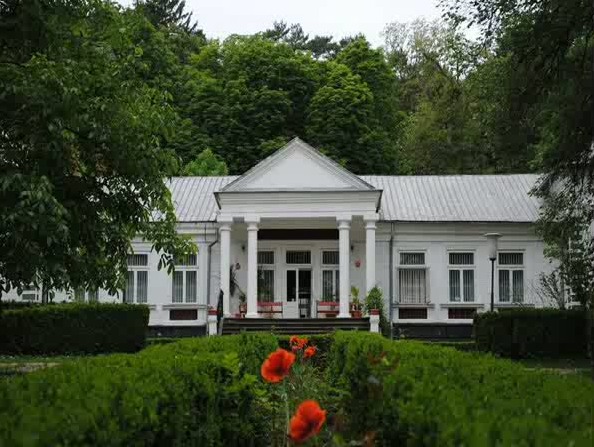
              In a perfect symbiosis with the nature, on top of a hill, guarded by woods and the waters of the Tazlaul Sarat river, the Tescani manor is erecting, its existence leading us on the traces of George Enescu at his creative maturity.

              Currently hosting the headquarters of a Centre of culture and creation for the painters, literature people or musicians, the manor bears a history which springs in 1880, when boyar Rosetti Tescanu has erected in the middle of a park crossed by paved alleys and surrounded by a flower garden and trimmed shrubs this building architectonically influenced by the main currents of those times. The place very soon became under the host’s patronage a meeting point of the artists and the members of the Unionist movement too, who have put the bases of Romania’s unification process.

              The cultural movement which hovered around the Tescani estate flourished at the beginning of the 20th century, and one of the maestros of the artistic soirees was the great composer, violinist, pianist and conductor George Enescu. Since 1900, when he met the Tescani mirage until his for ever departure abroad, in 1946, George Enescu has inspired a few months per year from the place’s beauty and scent, benefiting of the peace of the area, the kindness and artistic sense of the locals. Here he has composed the Oedipe opera, a work which made him famous in the world’s music. In 1939 he married Maria Rosetti Tescanu, the daughter of the manor’s owner and one of the most beautiful women of those times. Before withdrawing from the Russian troops, in 1946, he halted one last time at Tescani.

              tescani

              Maria Rosetti Tescanu and George Enescu, self-exiled to France, have decided to donate the manor and the 33-hectare estate to the Romanian state, which was to develop there a house of creation for the artists. Their gesture has saved the place from ruin, yet did not exempt it from the specific time hinders, the manor becoming a school and library, thus keeping in its patrimony the piano and the violin Enescu used to practice to, as well as the violin he had received as a prize at the graduation of his Vienna Conservatory studies.

              During the 70s, the Bacau local authorities, calling for various stratagems have given back the manor and the surrounding garden the destination wanted by their former owners, as it is specified in the Donation Deed.

              As a result, at Tescani a memorial house, a museum and an international culture centre operate. In consonance with the testamentary will of George Enescu in the manor’s park a tomb was made where the composer?s and his wife’s remains were to be brought, as they are buried in the Paris-based ”Pere Lachaise” cemetery. Their daughter’s opposition made that for now their last wish still stays unaccomplished.

              The cultural edifice transformed in 1990 in the Tescani Culture Centre, and afterwards in 1993 it became what it is today the ”Rosetti Tescanu — George Enescu” Culture Centre and a section of the George Enescu museum of Bucharest since 2005.

              In its current shape, the building consists of an Oedipus chamber concerts’ hall, an outdoor estrade in the manor’s park for 80-instrumentalists symphonic orchestras, as here takes place annually the ”Enescu — Orfeul Moldav’ Festival (Enescu — the Moldovan Orpheus), the only event of Romania which includes outdoor symphonic concerts. Likewise, it has a conference hall, three multi-task workshops, an art gallery, a classical library and a research specialized specialty, a reading or audition hall, accommodation and dining spacess for the creators coming around.

              The cultural Centre at Tescani is part of the ”Les Rencontres” European Association, based in Paris, of the ”Res Artis’ International Association, based in Amsterdam, and also of the European Network of residences for writers and translators based in Montpellier, which runs under the French Academy aegis.

              Another space dedicated to creativity and education in the County of Bacau is the Culture Centre which borrows the name of the Romanian sculptor George Apostu, who moved to Paris in the 70s. He was regarded as the successor of Constantin Brancusi.

              george-apostu

              Being established in 1990, the Centre operates a complex programme of assessment of the cultural legacy, of stimulation of the contemporary creativity through activities thought in an integrative, multi-disciplinary conception, having as main target to challenge and maintain a ceaseless, lively dialogue among the most divers creation genres, says Geo Popa, the institution’s director.

              According to him, the Centre’s cultural activities are of such a manner conceived that they would answer the expectations of diverse public categories through symposiums and colloquia regarding the most complex topics, but also by means of the creation workshops, painting, graphic, sculpture, decorative arts and photography shows, theatrical, literary, cinema and choreographic performances, classical and now-a-days music concerts.

              Through the specific of the projects and programmes it unfolds, the ”George Apostu” Culture Centre represents the ideal framework of the cultural and artistic reunions in several fields, such as modern and contemporary visual arts, video art, photography, architecture, graphical or decorative art, as well as other associate forms of artistic expression.

              The cultural legacy is one of the major priorities of the Centre’s activity too and, hence, ‘a special attention is given to its permanent enrichment with art operas bearing the signature of some valuable artists from the country and from abroad carried out within the international symposiums of sculpture and painting or in the personal and of group exhibitions „, says director Geo Popa. Therefore, the Bacau-based Cultural Centre holds currently a significant collection of priceless sculpture, painting, graphic, decorative art, creations belonging to some contemporary devoted artists who passed through Bacau.

              Of a significant cultural recognition is enjoying the ‘Outdoor museum”, organized in the institution’s park, with marble, stone or wood sculptures of huge dimensions.

              The idea of putting together the efforts of the Centre with the activities of the tuition institutions to carry out a joint programme of enlarging the young generation’s outlook to knowledge and beauty, to art and creativity is taking shape steadily through the ”Culture — Education, Education — Culture” programme.

              Out of the traditional cultural projects and programmes of the Centre’s we remind: the National Aesthetics Symposium, the granting of the Excellence Diploma and the Centre’s Prize, the ”George Apostu” Culture Centre’s Day on April 23, the „ArtistNe(s)t” International Programme.

              The Bacau-based institution emerged on the international cultural stage too as it is the promoter of some projects with coverage on other continents, collaborating with similar centres from the US, France, Venezuela, England, India, Poland, the Czech Republic, Slovakia, China.

              The ”George Apostu” Culture Centre is editing the ‘Stained Glass’ monthly culture magazine.AGERPRES

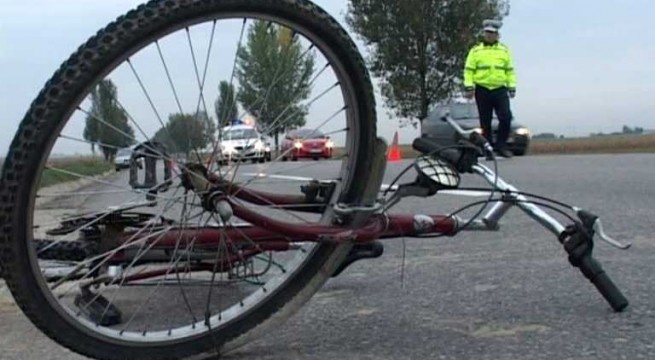
              Biciclist accidentat în comuna Asău

                La data de 29 iulie a.c., în jurul orei 15.00, poliţiştii Postului de Poliţie Asău au fost sesizaţi despre faptul că pe DJ 116 B din localitate, a avut loc un eveniment rutier în urma căruia o persoană a avut nevoie de îngrijiri medicale.

                La faţa locului, în urma cercetărilor efectuate, poliţiştii au stabilit că un sucevean de 37 de ani, în timp ce conducea un autoturism, la efectuarea unei manevre de depăşire, a acroşat un biciclist de 62 de ani, care deplasându-se în acelaşi sens de mers, se angajase în efectuarea unui viraj la stânga fără să semnalizeze şi fără să se asigure.

                Biciclistul a fost transportat la Spitalul Comăneşti pentru îngrijiri medicale.

                În urma testării celor doi participanţi la traficul rutier cu aparatul etilotest, rezultatele au fost negative.

                În cauză s-a întocmit dosar penal sub aspectul săvârşirii infracţiunii de vătămare corporală din culpă.

                Bacau: Pieton neatent, accidentat

                  Poliţiştii rutieri au cercetat la data de 29 iulie a.c., în jurul orei 10.00, un eveniment rutier cu victimă, produs pe strada Militari din municipiu.

                  Din primele verificări efectuate la faţa locului a rezultat că un bărbat de 32 de ani, din localitate, în timp ce conducea un autoturism, a surprins şi accidentat un bărbat de 59 de ani, care s-a angajat neregulamentar în traversarea străzii.

                  În urma evenimentului rutier pietonul a fost transportat la Spitalul Judeţean de Urgenţe Bacău pentru îngrijiri medicale şi a rămas internat.

                  Conducătorul vehiculului a fost testat cu aparatul etilotest, iar rezultatul a fost negativ.

                  În cauză s-a întocmit dosar penal sub aspectul săvârşirii infracţiunii de vătămare corporală din culpă.

                  Permis de conducere suspect

                    Poliţiştii Postului de Poliţie Negri au oprit în trafic, în noaptea de 28/29 iulie a.c., pe raza comunei, un autoturism cu numerele de înmatriculare provizorii, condus de un tânăr de 22 de ani, din localitate.

                    În urma verificărilor efectuate, poliţiştii au constatat că tânărul posedă un permis de conducere eliberat de autorităţile italiene, asupra căruia există suspiciuni că este fals.

                    În cauză, permisul de conducere a fost reţinut în vederea continuării cercetărilor şi s-a întocmit dosar penal sub aspectul săvârşirii infracţiunilor de conducere a unui vehicul de către o persoană fără permis şi uz de fals.

                    p1

                      p1

                      Bacau: Romanian identity was carved out in villages – testimonies from rural museums

                      Travelers wanting to know the authentic values of Romanian popular culture should, if we are to paraphrase historian Nicolae Iorga, „visit the countryside, village by village, crossing the thresholds of the old churches”, and if time is short they should visit „village museums, temples of the nation”.

                      Bacau’s such cultural institutions, raised by people with an admirable sense of these places’ history, fulfill three major roles: keeping the material values as symbols of the creative spirituality of the three ethnographic areas characteristic to the county — Trotus, Bacau and the Tutova Hills, offering access to the local traditions and allowing dissemination of knowledge regarding them.

                      Traditional peasant homes in the county combine elements of Moldovan architecture with a pragmatic view. The white houses, decorated with carved or fretted wood, ennobling the eaves, verandah or porch, are the main pillars in a homestead decorum in which, together with the house, we can find the trellis, the barn, the cellar, the outdoor oven, the well and the coop and hogsty. The flower garden in front of the house, the vegetable garden out back, the vineyard and the orchard are a permanent source of homestead upkeep as well as a constant reason for toil. On holidays or Sundays, the villagers dress in the traditional attire they inherited from their parents, in traditional silk „ie” (most common type of Romanian-style blouse) woven at home, in suits fashioned and embellished by hand, wearing leather opinci (a traditional type of footwear) made by their own hand. The craftsmanship of the villagers has bested even the hardest materials, allowing craftsmen to fashion them into objects necessary in the homestead.

                      The 491 villages in Bacau County, covering a total surface of 6,621 square kilometers, 2.8 percent of the country’s territory, keep alive, through these kinds of local museums, the olden ways of life, the moral, cultural or spiritual values of the Romanian village, which are „Important reference points, with an emblematic value for the county”, says Iulian Bucur, a researcher in the Museum Complex of Bacau.

                      „Metaphorically speaking we can say that such a museum is a history of the life of a community, whose pages are the exhibits and their evolution based on the identity of the dwellers and their distinctive signs. They are the thesaurus of that community, fact that highlights not only the idea of inheritance, of transmitting cultural values from generation to generation, of creating a palpable tie between past and present, but also the duty of today’s generations to carry this thesaurus into the future”, says, in her turn, Feodosia Rotaru, a Bacau researcher specializing in folklore and ethnography.

                      The type of village museums in Bacau County, built mostly on the initiative of teachers, professors and priests, the main mentors of the rural communities, differs greatly, ranging from institutions with multiple sections to institutions focusing on a single domain, to memorial houses, churches or even an entire village, as is the case of Berzunti, renowned for the highly-adorned homestead gates or Casin, well-known for the wooden ornaments that adorn the houses.

                      The „Casa Zamfirei” village museum of Sanduleni, a village situated 30 kilometers from the city of Bacau on the road to Onesti, was founded by priest Daniel Puiu. It is situated in a space that presents a miniature of village life through the traditional house last owned by Zamfira, the museum’s namesake. The grounds, with all the chattels typical of a somewhat wealthy homestead, a well, and a small chapel, complete the naturally-beautiful location.

                      The homestead-museum, with its clay porch covered in reed and planks, with windows typical of traditional homes built in the 19th century, contains within a rich collection of household items, homemade carpets, towels, traditional pieces of attire, furniture, embroideries, but also masks. The courtyard and annexes host agricultural tools and harnesses, reminding of the daily activities of the village dwellers. The wooden chapel is home to a collection of icons done either on wood by dwellers in the area, or reproductions of icons found at the Nicula Monastery.

                      The Sulta village museum, in the eponymous village well-known for its rich tradition in traditional crafts, is hosted by a former school. Among the exhibits donated by the old villagers we may find traditional attire worn usually on holy days and at religious ceremonies, embroideries, homemade lace table cloths, embroidered towels, icons and prayer books dating back to the late 19th century, but also homestead items, such as tools for processing hemp, looms and earthenware. The initiator of this local patrimony of culture and civilization, teacher Maria Craciun, says that the museum „is a village history lesson that pupils learn, of the traditions and crafts of their elders that they must keep”.

                      The ethnographic museum of Poiana Sarata reunites material values of this Romanian martyr village (the village and its dwellers suffered greatly during the Hungarian occupation of northwestern Transylvania in the Second World War) on the Trotus river valley deeply scarred by the injustices of history.

                      Hosted in two halls in the school’s building, the museum is composed of exhibits representative for the life of the village dwellers, being grouped into sections. The first is the section dedicated to the collection of traditional clothing for women, men and children, as well as clothing specific to the trades of the village. The second section reunites tools specific to the trades of the village: sheep husbandry, woodworking and weaving.

                      „For us it’s tradition. Everything is well rooted and nobody wants to change the village habits. That’s why every villager has donated an item from his own homestead for the museum, to make known the historical past of the place to all who want to get to know us”, says zootechnical engineer Nicolae Vranceanu, the caretaker of this museum.

                      The „Priest Vasile Heisu” ethnographic museum is hosted in the headquarters of the Racaciuni Commune Hall, a patrimonial edifice, nearly 25 km away from the city of Bacau on National Road 2 that ties the city to the town of Adjud.

                      The museum’s patrimony is the fruit of the labor of priest Vasile Heisu (1911-1971) who for several decades collected over 700 pieces of traditional attire and interior textiles from the villages in southern Bacau on both banks of the Siret River: Racaciuni, Orbeni, Pancesti, Parava, Valea Seaca and Corbeasca. Exhibited in a hallway and six rooms, the exhibits lie in cabinets recessed in the walls. The hallways is host to two traditional carpet made using the „chilim” technique.

                      The items of clothing are grouped after their village of origin and period in which they were created. The women’s clothing are formed from „catrinte” (a type of traditional headscarf), long ie-type dresses, silk handkerchiefs and wool girdles. Another type of women’s attire is composed of an „androc” (a flannel or wool skirt), a linen or silk shirt, catrinta, and wool girdle. The men’s attire is simpler, being composed of traditional „itari” (a type of tight pants made of wool or hemp), a simple shirt, vest, and money belt.

                      „All the pieces exhibited talk about the craftsmanship and good taste of women and girls in the villages of the Siret Valley”, says curator Feodosia Rotaru.

                      A special sector of the museum is destined to presenting tools used in creating these items of clothing. The museum being Racaciuni, practically, the birth act of the ethnography section of the Iulian Antonescu Museum Complex of Bacau after the donation made in 1971 by priest Vasile Heisu.

                      Built over six decades, the museum complex of Prajesti that bears the name of professor Paul Taralunga, is composed of exhibition halls hosting nearly 3,000 items grouped in eight sections: geology, paleontology, archeology, ethnography, numismatics, botanics, zoology and crafts, also featuring a botanical garden that houses over 2,000 species of trees, shrubs, decorative and wild flowers.

                      Visitors can see in this „space of palpable culture and education”, as professor Taralunga would call it, situated 24 km away from Bacau City, mammoth fossils, teeth and bones, discovered in the old Siret riverbed, but also pottery fragments and other items of the Cucuteni culture, of the Neolithic and Bronze ages, as well as rare autochthonous mammals and birds, such as the greater spotted eagle and the stone curlew, stuffed by the students themselves, the most trusted helpers in the demarches of the skilled and enthusiastic Prajesti professor. Furthermore, the museum is host to traditional items carved from wood and bone, some two centuries old.

                      Biology passionates can see monstrous lamb, pig or dog embryos preserved in the museum’s laboratory. The jars show visitor how a two-headed lamb or pig looks like. Also kept in formalin are a baby dolphin and an adult seahorse. Another room is host to other autochthonous stuffed animals such as a bear, a fox and a European pine marten.

                      History buffs also have the occasion to see what a halberd, or other weapons used in Romania’s historical wars, look like, their origin being ascertained following their discovery in archeological expeditions in the county coordinated by specialists from the museum in Bacau.

                      The museum complex in Prajesti, founded in 1971 by professor Taralunga, the museum’s coordinator until 2012, when he passed away at the age of 91, has recently received from local authorities 400,000 lei for modernization and rehabilitation of some sectors.

                      Historian and curator Iulian Antonescu, speaking of the „unique institution” of Romania that is the museum complex in Prajesti, said that „its initiator was not only preoccupied with searching for museography treasures, but was also an excellent spreader of science, both from the teaching desk, as a professor, and among his fellow villagers”.

                      The „Zestrea stramosilor” (Heritage of our forefathers) village museum in the village of Trebes, situated 12 km east of Bacau City, was founded on the initiative of teacher Vasile Ababei, who also benefited from the support of well-known naive painter Ioan Maric, a local of the village.

                      The museum presents testimonies that attest the history, culture and social life of the dwellers there for which their village is „like an icon”, as the banner outside of the museum’s entrance reminds us. Household items, traditional clothing, carpets and testimonies from the village’s sons „all constitute a thesaurus that keeps and makes known the traditions, customs, social and cultural practice of the villagers of 100 years ago”, says mayor Marcelin Solot. The village museum in Trebes also contains an exhibit comprised of naive paintings done by Ion Maric, he who presents in a simplistic and anecdotic manner characters and occurrences of village life.

                      An exhibition space that incorporates an entire village is Berzunti, a village in Bacau County upon which, its dwellers say, „a blessing descended”. The houses, but especially their monumental gates, are recognized through their originality. Fulfilling, as fine arts professor Aurel Stanciu says, „both a practical aspect but also a cultural dimension”, the gates of Berzunti, marks of an entire village’s identity are tall, formed by three carved oak pillars topped by a shingled roof, a design unique to Romania. The motifs used by the village’s craftsmen are geometrical, floral or zoomorphic. The fame of the Berzunti gates has crossed the borders of the country, especially after 1990 when western visitors dawned in awe on these creations of popular art. Many of the craftsmen were requested to work in France, Germany, Italy, and Spain to embellish constructions of foreigners and many did not return to the village, continuing to create in other parts of the world, so that, at this moment, only two or three villagers keep the tradition alive.

                      Another creative aspect that has made Berzunti known is the manufacturing of traditional masks. The most renowned representative in this matter was Dumitru Vranceanu. Inspired by the faces of the villagers in creating the over one thousand masks he manufactured over his 80 years of life, he skillfully created them using leather, wool, beans, river rocks and wood.

                      Dumitru Vranceanu established his fame under the name of Mos Tache, in exhibits not only in Romania, but also in Europe, America or Australia. It was he who brought to foreigners the songs of Berzunti, roaming the world, delighting the public, together with an instrument he created, a sort of metal violin to which he attached a brass clarion.

                      Part of his creations can be found in a small collection gathered at the village school but most of his masks can be found in private collections around the world.

                      The village museums are „a blessing in supporting the traditions and originality of popular creation that attest the artistic perception of the beauty of landscapes, but also the inventiveness and diligence of people in Bacau’s villages” says ethnographer Feodosia Rotaru.AGERPRES


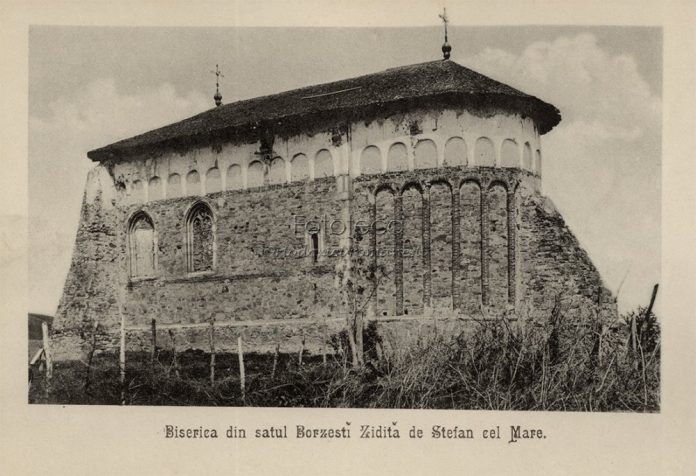
                      Borzesti (Bacau) – church of slain friendship

                      The ‘Virgin Mary’s Assumption’ Church in Borzesti was erected by the order of Stephen the Great, the Ruler of Moldavia, between 1493 and 1494, ‘in remembrance of the holy ancestors and their parents.’

                      The dedication in the inscription reveals that this place of worship, unlike the other 47 ones founded by the ruler, built after a number of battles fought by Moldavia under his command against the Turks, has also soul-related meanings.
                      Borzesti is assumed to be the place where Stephen the Great was born, but it is certainly, as historians say, the place where he spent a significant part of his childhood.

                      The two versions of the ‘Borzesti Oak’ legend, collected by N. Gane and Ortansa Racovita, link the existence of the church to a tragic event occurred precisely in that time in the life of the future ruler of Moldavia. According to them, Stephen and Mitrut, a good play friend, were surprised by a horde of Tartars. Invaders allegedly hanged Mitrut from the branch of an oak, on the place where, later on, Ruler Stephen the Great ordered the erection of the church, with the altar table being placed, by his decision, right over the roots of the tree his play friend had been hanged from.

                      The church close to his soul was endowed, right from the beginning, with expensive worship items and manuscripts, as „Tetraevanghelul,” given in 1495 and later arrived at the Zografu Monastery in Mount Athos. Lacking resources, the church was dedicated by Ruler Constantin Duca, in 1694, to the Bogdana Monastery, located not far away, under which it functioned until 1904, when it was repaired. Then, the church returned to its initial status, and, over time, it was also restored in 1936, 1951-1952, 1995 and 2002-2004.

                      ‘The building has monumental proportions, in a rectangular shape, with no tower, arched with spherical caps. The altar is covered with a cap in a quarter-sphere, the nave with a spherical one and narthex with two caps leaning on a double transverse arch which divides the surface of the room into two equal parts,’ explains architect Constantin Amaie, who designed the imposing Orthodox cathedrals in Bacau and Bucharest, which are under construction.

                      The foundation of the church in Borzesti was built of stone, and the roof is covered with tiles.

                      The decoration of facades is given by the combination of construction materials — rough stone and brick, the alternation of arches and niches of bricks, the use of ceramics in the form of discus and from elements of processed in Gothic style and frames. The apse of the altar is decorated with 13 elongated and narrow niches, between whose arches there are discuses coloured in green, yellow, brown and orange.

                      ‘The entrance door is made of Gothic moldings, and the one between the narthex and the nave has a Gothic frame. The windows of the narthex are large and have ornamentation in the upper part, while those of the nave and altar are narrow and elongated in the style of Musatin architecture,’ says architect Constantin Amaie.

                      The inscription is placed above the entrance door, in a small niche. The floor was made of brick.

                      It is not known whether the church was painted originally, but the church has been recently painted in the fresco technique by the renowned painter Grigeore Popescu-Muscel who wanted to create compositions in the style of Stephen the Great era.

                      The wall iconostasis, with icons dating from 1775, painted in fresco by monk Nifon Zugravul, has been preserved and restored.

                      The church is, in its simplicity, elegant, both outside, as well as on the inside, expecting its visitors, who will be surprised to discover, as historian Ioan Mitrea says, ‘a monument of culmination of the architecture of the Stephan the Great area.’

                      In the near vicinity of this church there is the Culture and Religious Art Museum, founded in 1994, in whose showcases there are worship objects, iconostasis, icons and books dating from the 18th 19th centuries from collections in Bacau County.

                      Flower of faith opened to the eye in the period of Stephen the Great and Holy, the Church in Borzesti marked, in Bacau County, the beginning of erecting some churches with openness to culture.

                      *** The ‘Holy Trinity’ Monastery in Bogdana is one of those places of collecting and transmitting the eastern teachings and traditions over the centuries.

                      The tumultuous history of the churches began in 1660, when a family of boyars built a church converted afterwards in a monastery, which they endowed with estates and liturgical objects. The monastery was the victim, over time, of the attacks by Tartars, fires, Hapsburg occupation, the earthquake in 1739, the communist authorities, who, in 1960, drove away the 80 monks living there, and transformed the cells into hospital for patients suffering from mental illness. In 1975, it took another utility — a summer school camp — a period during which the old church was arranged as a dance hall, after the several centuries—old painting, done in neo-Byzantine style, was covered with paint.

                      However, each time, despite these hardships, it revived under the impetus given by the spiritual value remained on the mind of the locals. In 1978, as a result of some sustained steps by Archimandrite Isaia Tugurlan, the worship place resumed its ecumenical and cultural mission, originally as a hermitage of nuns, and then as monastery.

                      An impressive spiritual heritage was gathered, over time, at Bogdana. Saved from the vicissitudes of time, among other things, were over 700 icons from the 18th — 19th centuries, 4,179 old religious or secular books in Slavonic, German, Armenian, Greek and Romanian.

                      The oldest volume — ‘The Gospel of Bucharest’ — dates from 1693.

                      The monastery also houses valuable collections of priest’s clothes and religious objects. Preserving with holiness also traditional values, the monastery’s museum also houses a comprehensive exhibition with the most successful items of folk art donated by the locals, but also creations from the monasteries’ carpet-sewing, painting and religious sculpture workshops. AGERPRES

                      ULTIMELE ȘTIRI