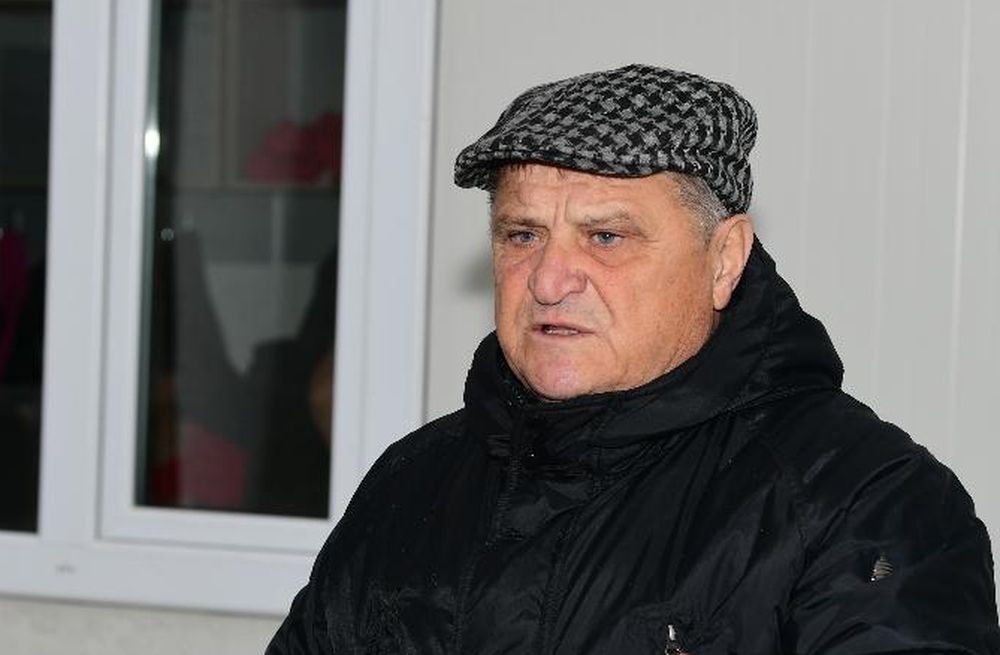
Gheorghe Poenaru, one of the most respected figures in football in Romania’s Bacău region, turns 70 on Sunday, November 1, marking a career defined by player development, promotions and memorable performances with local club FCM Bacău.
Poenaru, affectionately known as Ghiță, began his coaching career after the 1989 Romanian Revolution, taking charge of Aripile Bacău, now Aerostar, where he had previously played. He later moved to Petrolul Moinești, guiding the club from the county league through successive promotions to the second tier of Romanian football.
His work at Moinești brought him to the attention of FCM Bacău, where he joined the coaching staff in 1999 as assistant to Florin Halagian before taking over as head coach.
Poenaru recalls learning valuable lessons from Halagian during their brief collaboration, while his own managerial debut at FCM Bacău included a draw against reigning champions Rapid Bucharest, coached by Mircea Lucescu.
One of the defining moments of his career came in the spring of 2002, when FCM Bacău defeated Dinamo Bucharest 4-2 in a match remembered for its electrifying atmosphere and a spectacular bicycle-kick goal by striker Cursaru. The victory kept Bacău in contention for qualification for the UEFA Cup.
Poenaru described the match as an unforgettable experience, recalling the packed Municipal Stadium and the emotional reaction of the club’s late owner, Dumitru Sechelariu, who welcomed him back after an earlier departure by telling him: “The boy has come home.”
His career also included a return to FCM Bacău in 2009, when the club was struggling near the bottom of the second division. Under his leadership, the team finished sixth that season. After the club was relegated administratively following its withdrawal from the 2009-2010 competition, Poenaru remained involved and helped FCM Bacău secure promotion back to the second tier in 2011.
Throughout his career, he has also helped develop several players who went on to compete at higher levels, including Andrei Cristea, Marius Croitoru, Florin Croitoru, Cursaru and other talents who progressed from youth football or lower divisions.
Poenaru says he has never considered ranking his former players, arguing that he cared for all of them and sought to treat them fairly.
Looking ahead, he remains optimistic about the development of FC Bacău, whose academy has produced players and achieved results across several age groups. He believes the senior team is progressing but warns that the lack of a fully functional stadium in a city of Bacău’s size and ambitions remains a major obstacle.
His personal ambition is to see FC Bacău playing in Romania’s top division at home, in a modern stadium capable of hosting major matches and recreating the atmosphere of the memorable 2002 victory over Dinamo.
Poenaru plans to celebrate his birthday quietly with family and friends. A special gift has already arrived in the form of an invitation from former player Fane Apostol to attend the Champions League match between Club Brugge and Liverpool in Belgium on November 23. He intends to make the trip with his eldest grandson, Tudor, 19.
Asked in an earlier interview how he hoped to be at the age of 70, Poenaru gave a concise answer: “At least as I am now.”
Six years later, his colleagues and supporters continue to associate him with the same qualities: principle, warmth, humour and a lasting commitment to football in Bacău.