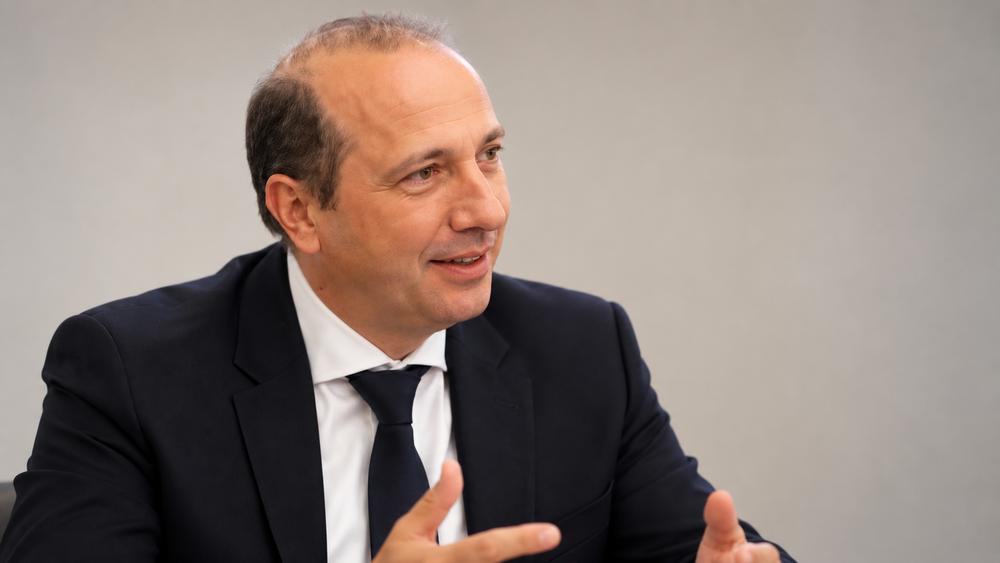
The George Bacovia University in Bacau is focusing on practical skills, closer interaction between students and teachers, digital infrastructure and stronger links with the labour market, Rector Andrei Octavian Paraschivescu said in an interview.
Paraschivescu said the university’s approach is based on combining academic training with practical skills and maintaining a direct relationship between students and teaching staff.
“For us, the student is not simply the beneficiary of courses. The student is a partner in the educational process,” Paraschivescu said, adding that the university’s goal is for graduates to leave with not only theoretical knowledge, but also practical skills and the confidence needed to enter and develop professionally in the labour market.
The university currently offers undergraduate, master’s and postgraduate programmes. Undergraduate programmes include Computer Science, Economics of Trade, Tourism and Services, Management, Law and Public Administration.
At master’s level, programmes include Public Administration Management, Business Management, Judicial Career, Criminal Sciences and Forensics, and Entrepreneurial Law. Postgraduate programmes focus on areas including educational institution management, procurement management, management of social and healthcare service institutions, and the implementation of digital technologies in education.
According to the rector, the university seeks to ensure that its programmes combine theoretical instruction with seminars, practical work, projects, research, internships and other forms of applied learning.
He said the university has also placed greater emphasis in recent years on digital and entrepreneurial skills, which he described as increasingly relevant across the private sector, public administration, legal professions and entrepreneurship.
The university has invested in digital infrastructure and modern learning spaces, including laboratories and specialised facilities for forensic studies, a digital courtroom simulator, behavioural studies, digital business administration, foreign languages and multimedia activities.
“These facilities allow us to move more easily from explanation to simulation, from theory to practice and from passive learning to learning through experience,” Paraschivescu said.
The university also encourages students to take part in workshops, conferences, scientific communication sessions, entrepreneurial activities, meetings with professionals, mobility programmes and complementary training.
Paraschivescu said extracurricular courses and professional certifications can help students expand their skills without additional costs in cases where such programmes are offered free of charge through university projects and partnerships.
International mobility is another component of the university’s educational offer. Through the Erasmus+ programme, students can study or undertake training in other university environments while developing language and intercultural skills, as well as greater autonomy and adaptability, the rector said.
The university’s support for students’ transition from higher education to employment includes internships, applied projects, contact with professionals, career counselling, tutoring, access to academic resources and the development of digital and entrepreneurial skills.
“The integration into the labour market actually begins in the first year of university,” Paraschivescu said.
He said the university’s responsibility is to create the conditions in which students can become autonomous professionals, through qualified teaching staff, relevant programmes, infrastructure, practical opportunities and an academic environment in which students can ask questions, receive feedback and receive guidance.
“Students should not choose only a specialisation, but an environment in which they can grow,” Paraschivescu said, advising prospective students to consider the teaching staff, the connection between their studies and professional reality, available resources and opportunities beyond the classroom.