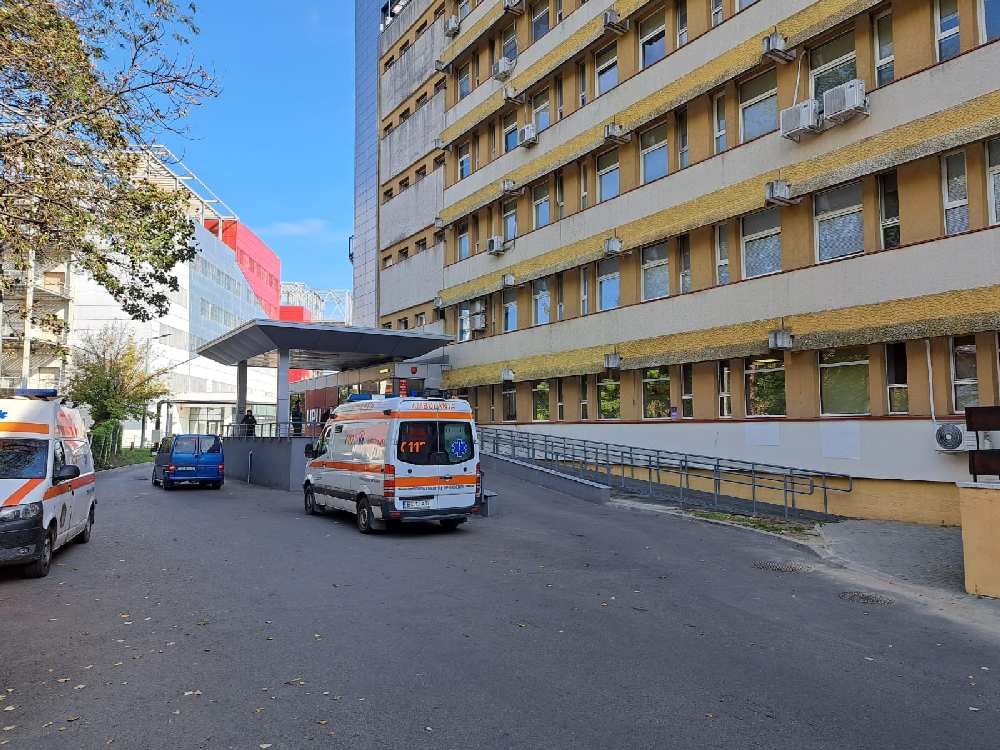
Nearly half a billion Romanian lei managed in a single year, more than 1,400 hospital beds, almost 46,000 discharged patients and a staffing shortage affecting nearly every professional category. These are just some of the figures that define the Bacău County Emergency Hospital, the largest healthcare facility in Bacău County and one of the most important hospitals in Romania’s northeastern Moldavia region.
The hospital’s 2025 activity report offers a snapshot of an institution operating close to capacity, handling a growing volume of patients while facing increasing challenges.
1. A Hospital the Size of a Small Neighborhood
Bacău County Emergency Hospital has 1,449 approved beds, of which 1,341 are funded under contracts with Romania’s National Health Insurance House (CNAS). It is the largest inpatient medical facility in the county.
2. Around 1,000 Patients Are Hospitalized Every Day
Acute care wards recorded an average occupancy rate of 77.8%, while chronic care units operated at 66.8% occupancy.
In practical terms, nearly 1,000 patients are hospitalized at the same time on any given day—roughly equivalent to the population of a small rural community.
3. One in Every 13 County Residents Is Hospitalized Here Each Year
In 2025, the hospital treated and discharged 45,663 acute-care patients, in addition to more than 1,600 chronic-care cases.
Relative to Bacău County’s population, this means that approximately one in every 13 residents is hospitalized at the facility each year, excluding patients referred from other counties.
4. Nearly One Quarter of Positions Remain Vacant
The hospital’s staffing plan provides for 2,554 positions, but only 1,906 are currently filled.
In other words, almost one out of every four positions is vacant, affecting virtually every professional category, from physicians and nurses to orderlies and support staff.
5. Nearly 100 Doctors Are Missing
The hospital has 313 physician positions, yet only 220 are occupied.
With a staffing rate of just 70%, the shortage places significant pressure on medical personnel and complicates the organization of emergency and on-call services.
6. The Largest Shortages Are Among Pharmacists and Orderlies
While nursing positions are filled at a rate exceeding 80%, shortages are more severe in other essential areas.
Only four of ten pharmacist positions are occupied, while just 22 of 37 orderly positions are filled.
Although less visible to patients, these roles are essential to the hospital’s day-to-day operations.
7. Two-Thirds of the Hospital’s Budget Goes to Salaries
In 2025, the hospital reported total revenues of 465.6 million lei.
Of that amount, 307.3 million lei—66% of total revenue—was spent on personnel costs.
The figures illustrate a common reality across public healthcare systems: medical services depend primarily on human resources.
8. Medicines Cost More Than 63 Million Lei Per Year
After salaries, pharmaceuticals represent the hospital’s largest expenditure.
In 2025, spending on medicines reached 63.7 million lei, accounting for nearly 14% of total revenue.
Additional costs include medical supplies, laboratory reagents and disinfectants, all indispensable to patient care.
9. Patients Are Becoming Increasingly Complex
The hospital’s Case Mix Index (CMI)—an indicator used to measure the complexity of treated cases—increased from 1.55 in 2024 to 1.62 in 2025.
Although the increase appears modest, it reflects a growing number of patients requiring more advanced diagnostics, procedures and medical resources.
10. Day Hospital Services Continue to Expand
One encouraging trend is the increasing use of day hospitalization.
The hospital delivered 105% of its contracted day-care services, indicating that a growing number of examinations and treatments can be performed without overnight admission.
This reflects the direction taken by modern healthcare systems, which increasingly emphasize efficient treatment, shorter hospital stays and lower costs.
Conclusion
The 2025 activity report portrays a hospital operating under constant pressure. Bacău County Emergency Hospital treats tens of thousands of patients every year, manages a budget approaching half a billion lei, and handles increasingly complex medical cases.
At the same time, staffing shortages remain its greatest challenge. Nearly 650 positions are vacant, including almost 100 physician posts, placing sustained pressure on the existing workforce.
The paradox is clear: despite filling only about 75% of its approved staffing positions, personnel expenses already account for two-thirds of the hospital’s revenue. The hospital’s future will therefore depend not only on recruiting additional healthcare professionals, but also on securing sustainable funding and improving efficiency while meeting the growing healthcare needs of the population.