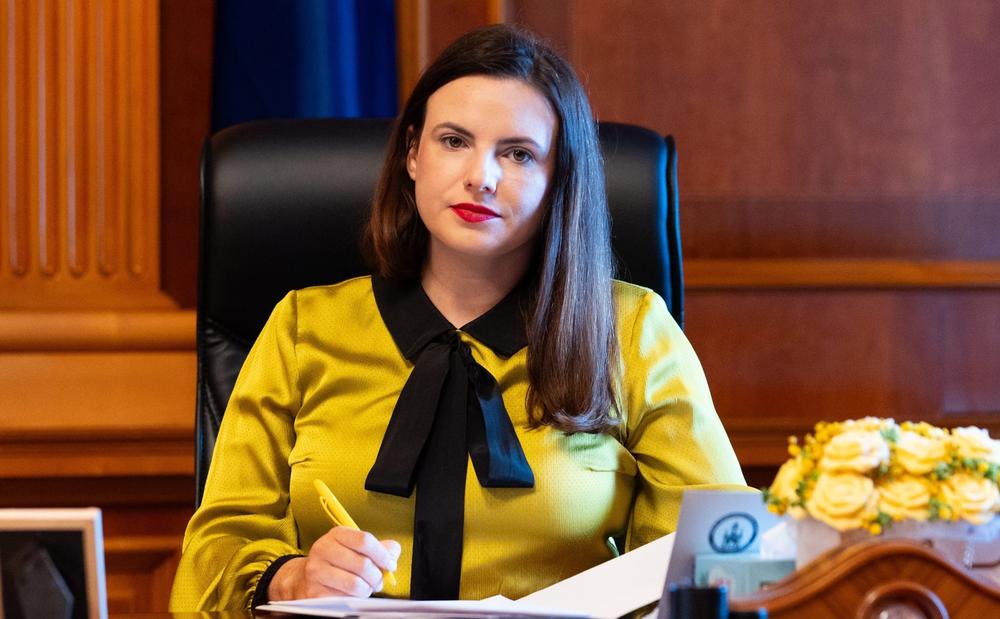
Diana Enache, an MP representing the nationalist Alliance for the Union of Romanians (AUR) and the party’s Bacau branch leader, has outlined economic, education and healthcare priorities for Romania and Bacau County in an interview, while calling for measures aimed at encouraging investment and retaining young people in the region.
Enache said one of the main challenges facing Bacau is the departure of young people, noting that only a small number of her former school and high-school classmates have remained in the county.
She argued that central and local authorities should create conditions that would allow young people who study or work abroad to return, establish families and use their professional experience locally. She also called for greater support for small entrepreneurs and young families, citing what she described as administrative and fiscal obstacles faced by businesses.
According to Enache, Bacau needs economic strategies adapted to the specific characteristics of different areas of the county. She cited Bacau municipality, Onesti, Moinesti and the Trotus Valley as areas with different economic challenges and opportunities.
In the Onesti area, she said, the loss of industrial capacity and jobs should be addressed through the attraction of productive investment rather than primarily through an expansion of public administration or commerce.
Enache said that one of her main priorities as an MP has been bringing local issues from Bacau County to Parliament. She also cited state-budget funding directed to the county and pointed to a bridge built in Bogdanesti commune after part of the local population had been isolated following floods earlier this year.
She said she has raised issues concerning education, healthcare, public administration, digitalisation and public services, including the condition of schools, teacher shortages, the lack of family doctors in rural areas and access to dental services.
Among the projects she is currently working on, Enache mentioned the creation of a hyperbaric chamber at the Bacau County Emergency Hospital, a project she said had been approved and was awaiting a feasibility study. She described the project as a priority and said patients currently leave the county to access such treatment.
At national level, Enache said AUR’s economic priorities include support for industry, small and medium-sized enterprises and domestic production, reducing administrative and fiscal burdens on businesses, targeted financing for investment and equipment, and public procurement policies focused on domestic production.
She also listed measures concerning prices and the cost of living, competition and consumer protection, as well as price caps and monitoring in areas affected by price shocks, such as energy and food. She identified domestic energy production as another key area.
Asked about her legislative priorities for the next parliamentary session, Enache identified three areas: the economy, education, and family and demographics.
In the economic field, she said she would focus on reducing administrative burdens for SMEs, fiscal predictability and measures aimed at encouraging investment and job creation. In education, she highlighted vocational, technological and dual education and closer links between qualifications and labour-market needs.
Her third priority concerns family and demographic trends, including access to housing, support during the first years of a child’s life and tax policies concerning families with children.
On Romania’s relationship with the European Union, Enache said AUR supports Romania’s membership of the EU but argues that the country should negotiate more actively and defend its economic interests, companies and citizens at European level.
“Cooperation at European level, yes, but between states that respect their identity and interests,” she said.
Enache also criticised what she described as an increasingly confrontational political environment in Romania and called for greater cooperation between government and opposition on issues concerning the country’s interests.
She said AUR had chosen not to escalate tensions following the cancellation of the previous elections, describing the party’s response as intended to avoid contributing to potential violence. These are Enache’s characterisations of the political situation and of her party’s conduct.
On healthcare, she called for investment in hospitals, family medicine, prevention and access to medical services in smaller communities, as well as measures to address staffing shortages.
In education, Enache pointed to what she described as a gap between the education system and labour-market requirements. She cited a figure of 19.2% for the share of Romanian young people aged 15 to 29 who were neither employed nor in education or training in 2025, compared with an EU average of 11%, and called for stronger vocational and dual education programmes.
Asked what she would tell voters who disagree with AUR’s political position, Enache encouraged citizens to independently check political information, follow parliamentary and local council proceedings and examine legislative proposals.
She acknowledged that people can legitimately disagree with AUR’s doctrine and said citizens should make their own assessments based on information and political programmes.
Enache also identified what she described as fear and intimidation at