Renowned Romanian boxing coach Relu Auraș has taken on a new technical role at CSM Bacău, where he is coordinating the club’s wrestling and weightlifting sections, drawing on more than three decades of experience in high-performance sport.
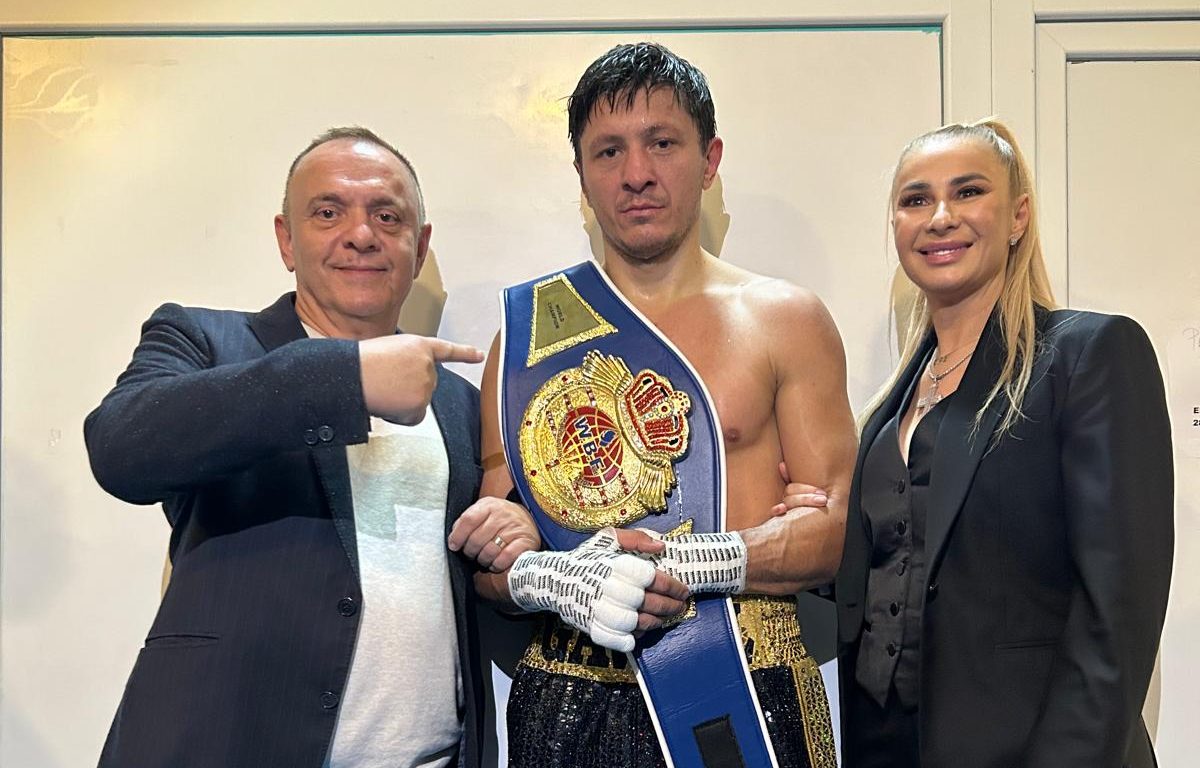
Auraș, who has trained several generations of Romanian boxers, including professional world champion Ronald Gavril and Olympian Mihai Nistor, began his new position in July 2026. He is paid 3,500 lei ($810) per month for each of the two sections, according to an interview published by Deșteptarea.
The appointment marks a change of direction for Auraș, who spent most of his career in boxing. He said the position was created because CSM Bacău’s management and board wanted an experienced specialist to provide additional technical support to two of the club’s most successful departments.
“I consider myself a methodologist,” Auraș said, explaining that his role involves monitoring athletes and coaches, analysing training procedures and performance, identifying problems and recommending measures to improve preparation.
The two sections are currently coordinated by former international wrestler Eusebiu Diaconu and weightlifting coach George Călin. Auraș said both have produced athletes who have competed and won medals at European and World Championships, with Olympic qualification now among their objectives.
His appointment also comes after a difficult period in Auraș’s professional career. He said he went without a salary for approximately a year and a half during financial difficulties affecting Romanian sports clubs, continuing to work voluntarily with his athletes.
“In 2025, like many clubs under the Ministry of Sports, SCM Bacău faced major financial problems. Sports activity contracts were initially cancelled, so for almost a year and a half I was not paid, although I continued to work as a volunteer,” Auraș said.
He eventually returned to a paid coaching position at SCM Bacău in May 2026. He had previously moved to CSM Bacău with several athletes during the period in which SCM was unable to pay its coaches and athletes.
Auraș said his new role at CSM Bacău also reflects his long-standing relationship with the club. He claims to have played a key role in the establishment of CSM Bacău in 2010 and later built its boxing department into one of Romania’s strongest, winning numerous national titles at senior and youth level.
Among the boxers he worked with were brothers Ronald and George Gavril, Mihai Nistor and Costică Bejenaru. Nistor qualified for the Olympic Games, while Ronald Gavril later became a prominent professional boxer and world champion.
Auraș said his experience in boxing is also relevant to wrestling and weightlifting because all three disciplines belong to what he described as “heavy athletics” and share a number of principles in physical preparation.
Unlike a traditional coach, Auraș said his new position gives him greater flexibility to observe training sessions without being tied to a fixed daily coaching schedule.
“I work on the field, as they say, but I work even more with my mind,” he said. “I discuss my findings openly with the coaches and coordinators so that we can solve problems quickly. I then prepare analyses, summaries and reports for CSM Bacău management.”
He said his first two months in the position were largely devoted to understanding the two departments and their athletes, with more extensive performance optimisation work expected ahead of the next Olympic cycle.
The appointment has also brought Auraș back into a closer relationship with CSM Bacău, an institution with which he has a long history as both coach and administrator.
Asked about his political involvement, Auraș acknowledged that he joined the Alliance for the Union of Romanians (AUR) in 2024, saying his decision was motivated by his desire to promote Romanian sport.
“I don’t do politics in the traditional sense. I only do the politics of sport,” Auraș said, adding that he intends to work with politicians from different parties on projects aimed at improving sports infrastructure and funding.
According to Auraș, Romania needs significant investment in sports halls, fields and stadiums, as well as better financial and material conditions for athletes and coaches.
His immediate sporting objective, however, is to use his experience to strengthen CSM Bacău’s wrestling and weightlifting programmes ahead of the 2028 Olympic Games.
The new role gives one of Romania’s most experienced boxing coaches a different position within elite sport — no longer directly responsible for a boxing ring, but tasked with analysing, advising and helping develop athletes and coaches in two other Olympic disciplines.