
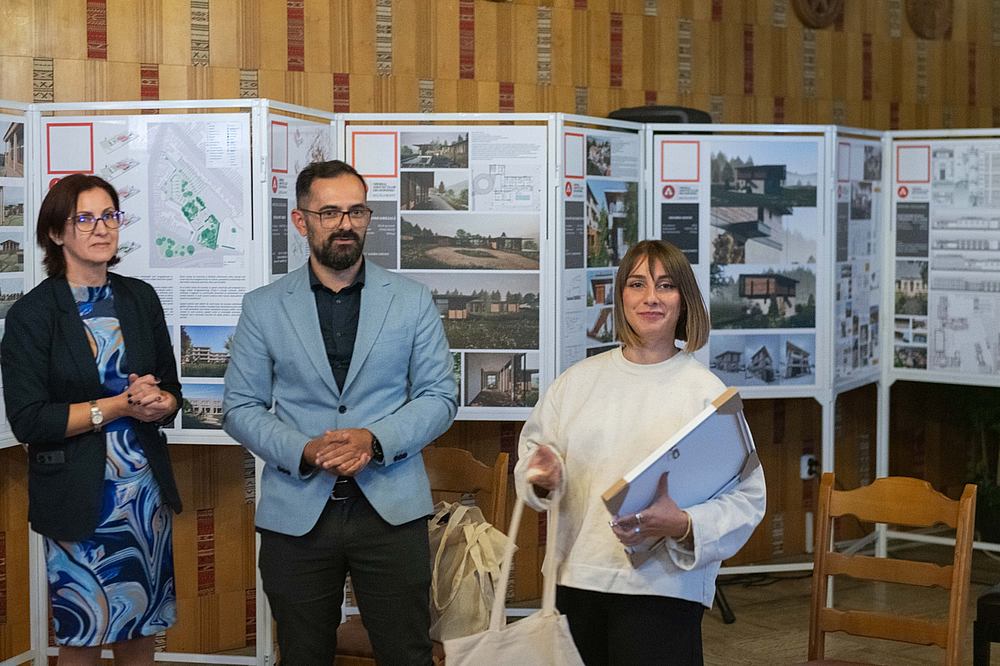
The Order of Architects of Romania (OAR) is marking 25 years since its establishment, an anniversary that offers an opportunity to reflect on the evolution of the architectural profession and its role in shaping communities, architect Dan Ababei, president of the OAR Bacău-Neamț Territorial Branch, said in an interview.
Ababei said the anniversary should be viewed not only as a celebration but also as a moment of reflection and a chance for the profession to redefine its place in an increasingly digital society. He stressed that OAR intends to become more visible and involved in everyday community life, strengthening dialogue between architects and the public.
The Bacău-Neamț branch has grown from 84 founding members in 2001 to more than 330 members today. Among its major initiatives, Ababei highlighted architectural exhibitions, professional events, urban-planning debates, partnerships with public and cultural institutions, as well as the re:START Bacău ideas competition, which focused on the revitalization of the city centre.
According to Ababei, the architectural profession has undergone major changes alongside Romanian society, while the public status of architects has faced a degree of decline in the social-media era. Nevertheless, he argued that the architect’s role remains fundamental because architecture ultimately creates physical spaces and buildings that shape people’s everyday lives — a role that technological developments, including artificial intelligence, are unlikely to eliminate.
Speaking about Bacău, Ababei described the city as a living organism in which successive historical periods remain visible through its architecture. The communist period, in particular, brought accelerated urbanization and extensive construction of collective housing, while later thermal insulation works significantly altered the appearance of many buildings. At the same time, the city retains a number of buildings of considerable historical and architectural value.
He also welcomed the rehabilitation of Bacău’s Administrative Palace, saying the restoration provides an opportunity to bring the landmark back into the city’s public life. He praised guided tours organized by the Prefecture and suggested that opening the building to the wider public through various events could add value both to the monument and to the city.
The re:START Bacău competition, organized by the OAR Bacău-Neamț branch together with OAR Concursuri and in partnership with Bacău City Hall, approached the city centre as a system of shared public spaces rather than simply a collection of buildings. The ideas submitted, particularly those concerning the Cathedral Park area and the wider central zone, could contribute to a future urban-development strategy for Bacău, Ababei said.
Ababei also pointed to several architects whose work has left a lasting mark on Bacău, including George Sterian, Paul Petriciu, Gheorghe Nicolae Ionescu-Berechet and Liviu Niculiu. He expressed optimism about the younger generation, describing young architects as energetic and increasingly committed not only to their profession but also to active involvement in society.
Looking ahead, Ababei said OAR’s role should be to bring professional expertise into public debate, promote quality and facilitate dialogue. He argued that architects need to communicate more effectively with citizens and explain urban-development issues in language accessible to the wider public.
Summing up the organization’s first 25 years, Ababei said OAR had demonstrated that it can be a competent and open partner in the coherent, sustainable and durable development of the built environment, while emphasizing that the profession still has much more to contribute in the decades ahead.